Photo credt: Natalie Emerson
By Natalie Emerson
Assistant Editor
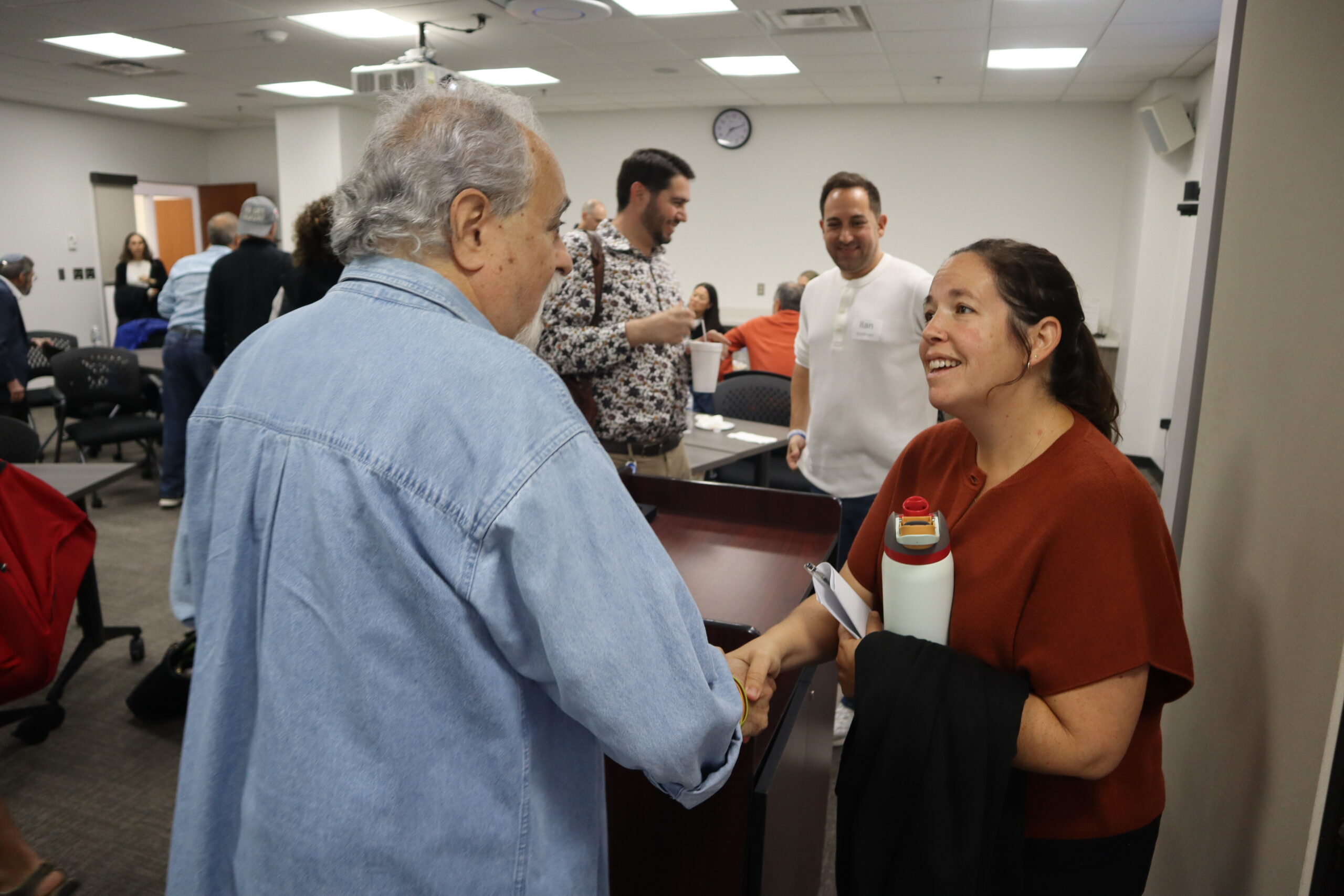
An explanation was promised. By the time I left the University of Cincinnati’s Old Chemistry Building at 7:40 p.m., I had not heard one that satisfactorily explained choosing October 7 for a presentation accusing Israelis of violence.
The speakers had described Palestinian suffering, shown disturbing footage and introduced a father whose American son died in the West Bank. Those accounts deserved attention. But why present them on the anniversary of the Hamas-led massacre without acknowledging its victims at the opening?
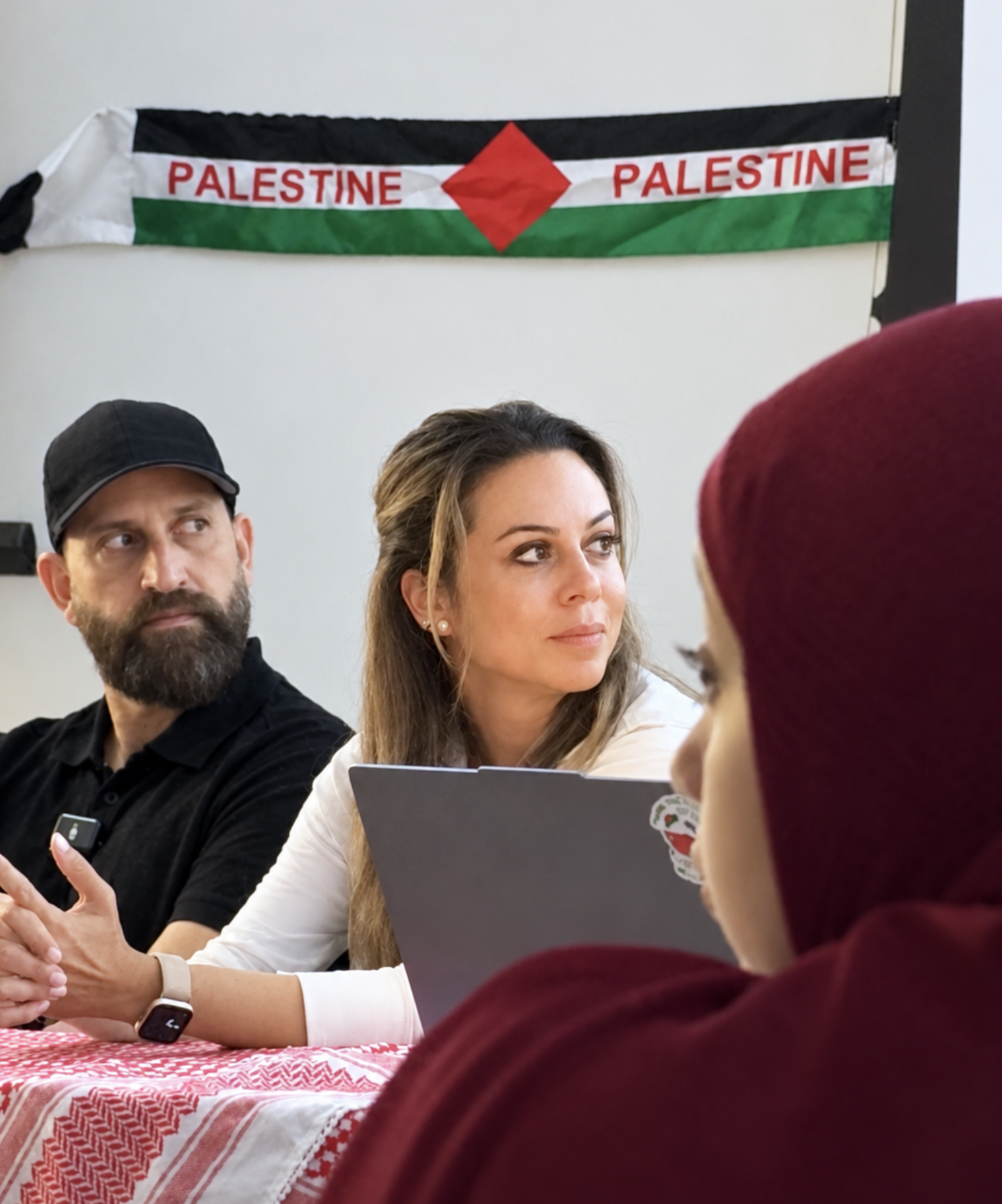
Hosted by UC’s Students for Justice in Palestine chapter and the Cincinnati Palestine Solidarity Coalition, the October 7, 2026, session was advertised as “Settler Violence.” Students filled the room. The evening’s argument would reach from Israel’s founding to American tax dollars, with Kamel Musallet’s account of his son’s death bringing the consequences into painful focus.
The presentation opened with “1948” projected before the audience—the year associated with the Nakba, Arabic for “catastrophe,” and Palestinian displacement surrounding Israel’s founding. Missing from the explanation I heard was the war against the emerging Jewish state.
The State Department’s historical account describes Arab rejection of the proposed partition and the Arab armies’ invasion following Israel’s declaration of independence. Leaving that history out gives students displacement without the surrounding struggle over whether a Jewish state would be permitted to exist. Palestinian losses deserve examination within that history.
The opening speaker discussed Palestinian deaths and inadequate shelter in Gaza as winter approached. He alleged burned homes, land seizures and an assault on an elderly man involving boiling water.
The principal presenter followed with footage presented as evidence of intimidation and destruction: a burning vehicle, menacing youths and water spilling from a vandalized reservoir. The images were disturbing. From the presentation alone, I could not independently establish who was responsible or the circumstances of each incident.
He described Israeli neighborhoods and outposts in the West Bank as instruments of expansion, dividing Palestinian communities and drawing military protection. Some outposts, he alleged, began with paid provocateurs; infrastructure and Israeli residents followed.
After October 2023, he said, harassment intensified. He alleged government provision of firearms and all-terrain vehicles. “They are given ATVs by the government in order to drive around and to scare the kids and to scare people away,” he said.
“Our tax dollars are speaking against us,” he told the audience. The implication was direct: Americans were helping pay for the abuses he described.
When he discussed the West Bank barrier, another essential explanation was missing. Israel began constructing it in June 2002 following a campaign of Palestinian suicide attacks. Even a United Nations humanitarian report examining hardships caused by the barrier acknowledges its stated security purpose.
Its route and restrictions on Palestinian movement warrant scrutiny. So do the attacks that led Israelis to demand protection. Students hearing about a barrier between neighbors needed to know what had made those neighbors afraid.
Musallet then described a different fear: a son badly injured, help sought and time running out.
Sayfollah Musallet, an American citizen, died near Sinjil on July 11, 2025. His father said Israeli attackers ambushed him, chased him and severely beat him. Friends found Sayfollah and placed him beneath a tree to shield him from the sun.
An ambulance was called, Musallet said, but it was attacked and turned back. He alleged that Israeli soldiers prevented further ambulances from reaching his son until a permit was secured roughly two and a half hours later.
When another ambulance arrived, Sayfollah was placed on a stretcher. He died before being loaded into it, his father said.
Musallet blamed the Israeli military for the delay and the United States for supporting it. “Who basically sponsors these IDF soldiers? It’s the US…it’s from us, from our tax money,” he said.
A death under those alleged circumstances demands investigation. In July 2025, U.S. Ambassador Mike Huckabee urged Israel to investigate. Reuters also reported the military’s account that the confrontation began with Palestinians throwing rocks at Israelis, while saying it could not independently corroborate either side’s version at that time.
Musallet’s loss deserves neither dismissal nor exploitation. His testimony must be taken seriously, while the responsibility he assigns must be established through evidence. Compassion and scrutiny can coexist.
The principal presenter’s discussion of escalating violence after October 2023 did not answer my concern about the meeting’s date. It explained a period under discussion, without satisfactorily explaining the choice of the massacre’s anniversary.
I left having heard a father’s account that deserved attention and a political case that required more questioning. Remembering Israeli victims would not have diminished Sayfollah’s life. Explaining Israel’s security fears would not have excused attacks on Palestinians.
Students deserved both the testimony and the context needed to judge the conclusions drawn from it. On October 7, that responsibility was especially difficult to overlook.