Courtesy of JNS. Photo credit: Hamed Saber via Wikimedia Commons
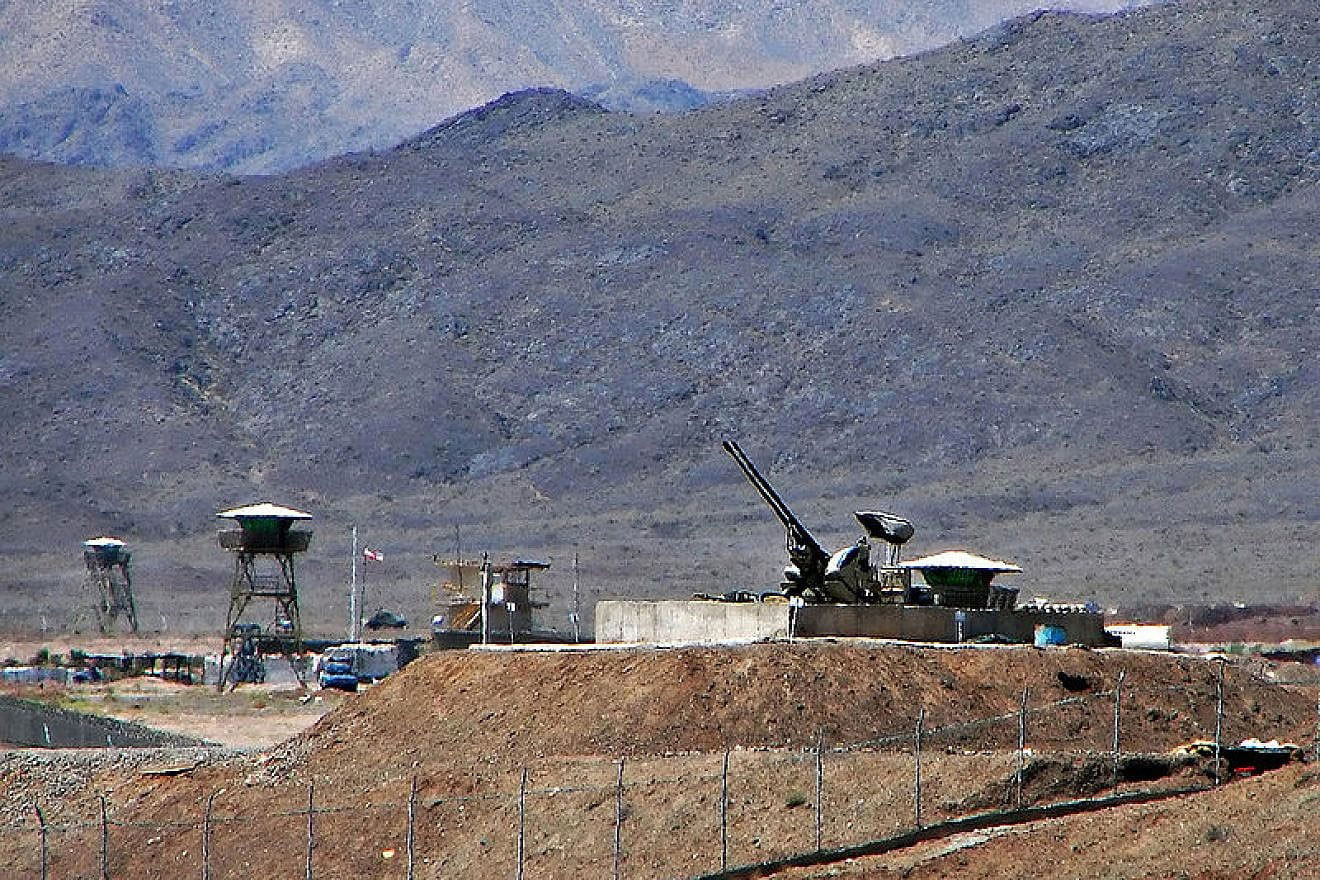
Anti-aircraft guns at Iran’s Natanz uranium enrichment facility
(JNS) — Turkish Foreign Minister Hakan Fidan said in an interview published Feb. 12 in Britain’s Financial Times that the United States and Iran are showing flexibility regarding a nuclear agreement.
“It is a positive sign that it appears the Americans are willing to accept uranium enrichment in Iran, subject to clear limits that will be set in advance,” Fidan said.
Turkey has played a central role in mediating between the U.S. and Iran, which led to the round of negotiations held on Feb. 13 in Oman. According to Fidan, “The Iranians understand they need to reach an agreement with the Americans, and the Americans understand that the Iranians have certain red lines. There is no point trying to force them.”
In an interview published earlier this week on CNN Türk, Fidan said, “Right now, at least, there does not appear to be an immediate threat of war,” but added, “We are doing everything we can to prevent disaster.”
Fidan said that Turkey has made clear to Washington that an “all or nothing” approach toward Iran will not yield results, and that Ankara has recommended the Americans focus first on the nuclear issue and not demand Tehran address four issues simultaneously — the ballistic missile issue, support for terrorist organizations and treatment of protesters, alongside the nuclear project.
According to him, Iran is prepared to discuss only two issues — the nature of uranium enrichment, and what will be done with uranium enriched to 60%.
Fidan added in the interview with the Financial Times that he believes Tehran “genuinely wants to reach a real agreement” and will agree to limits on enrichment levels and a strict oversight regime, as it did in the 2015 nuclear deal. However, he warned that expanding the talks to include ballistic missiles “will bring nothing but another war.”
Washington has demanded Iran give up its stockpile of uranium enriched to levels up to 60%, a level with no peaceful use and one short distance from the 90% level sufficient for producing nuclear weapons. According to estimates, Tehran’s stockpile is sufficient, after further enrichment, to produce about 10 nuclear bombs. Additionally, the U.S. has demanded that Iran not enrich uranium on its soil.
Publicly, Iran rejects demands to remove the uranium stockpile from the country and demands recognition of what it sees as its right to enrich uranium under the Nuclear Non-Proliferation Treaty.
Despite this, The New York Times reported during the recent tensions that Iranian National Security Council Secretary Ali Larijani proposed, in a meeting with President Vladimir Putin, transferring the stockpile to Russia, while ideas such as a regional uranium enrichment consortium in which Iran could participate have also emerged.
Fidan’s remarks came against the backdrop of the first round of negotiations between the U.S. and Iran, held on Feb. 13 in Oman with Omani mediation.
Iran is working to fortify the site adjacent to the nuclear facility at Natanz, according to a report by the Washington-based Institute for Science and International Security (ISIS) published on Feb. 11. The report is based on satellite images from Feb. 9 showing extensive construction activity at the site, including concrete pouring, truck traffic and use of heavy engineering equipment.
On Feb. 9, the institute reported Iran had completed covering the entrances to the tunnel complex in Isfahan as part of its preparations for the possibility of an airstrike or ground forces raid on its nuclear facilities, similar to the pattern observed before the attacks in the June war.
According to the report published on Feb. 11, the satellite images reveal ongoing fortification work at two of the entrances to the complex. Active traffic of heavy vehicles was observed at the site, including transport trucks, concrete mixers, excavators and cranes.
During the past month, a reinforced concrete frame was also added above the tunnel opening, designed to bear additional protective layers. According to the report’s authors, all these measures are intended to strengthen the tunnel openings and protect them from an airstrike.