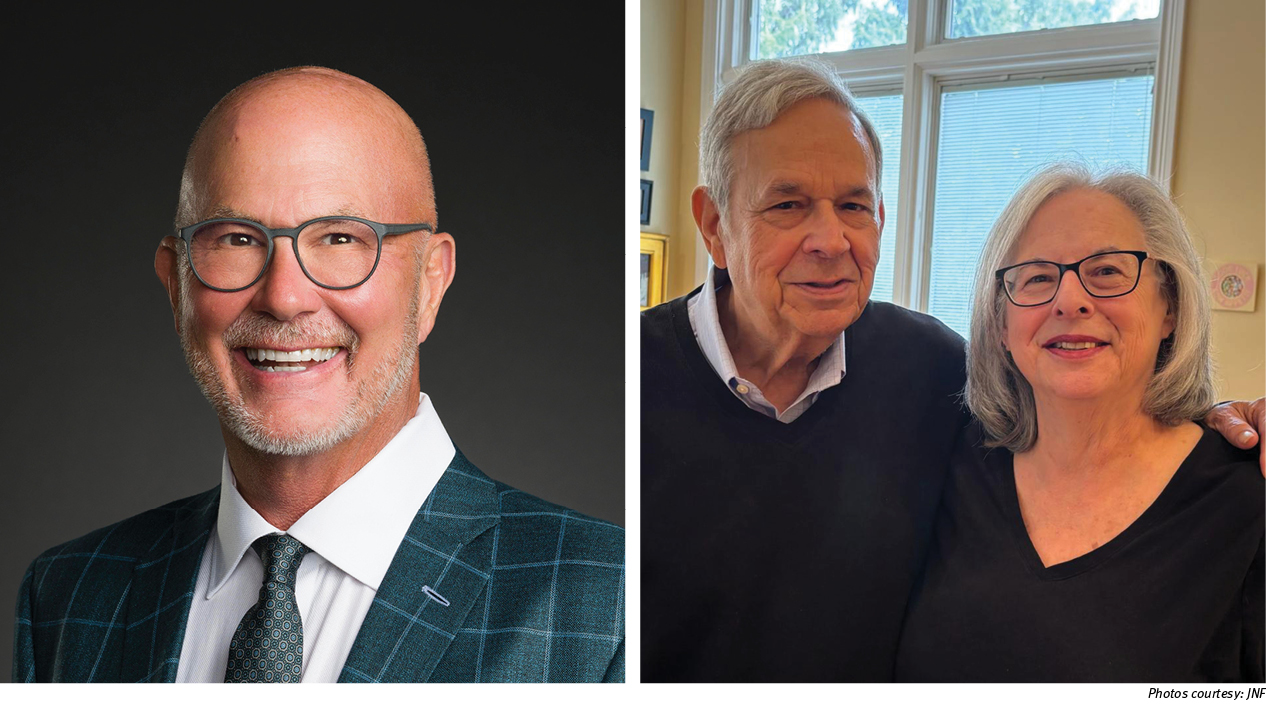
Submitted by The College for Contemporary Judaism
A first-of-its-kind study released today found synagogues in America’s heartland are disproportionately affected by the critical shortage of rabbis facing Jewish communities across North America. The study, commissioned by the College for Contemporary Judaism (CCJ), was conducted by Dr. Ira M. Sheskin, Director of the Jewish Demography Project at the University of Miami’s Sue and Leonard Miller Center for Contemporary Jewish Studies. Participants included nearly 400 congregations across the Midwest, South and Mountain West regions.
At least one challenge or skills gap was reported by 94 percent of participants while conducting their most recent rabbinic search: 77 percent found too few qualified applicants, 77 percent said their location deterred candidates, and 38 percent received three or fewer applications. Asked what applicants lacked, congregations named executive leadership (54 percent), people skills (45 percent), and community-building (43 percent) far more often than pastoral, ritual, or Hebrew skills.
“This study finally gives congregations across this vast region a voice—and their message goes well beyond the now familiar concern about a shortage of rabbis,” said Rabbi Dr. Gary P. Zola, CCJ’s Founding President. “Across much of the middle of the country, the rabbi is the Jewish community’s primary public voice. There is no national organization’s office down the street. There is the voice of the rabbi—and that role matters now more than ever. Our task is to educate agile leaders who recognize when the ground is shifting and are committed to serving the Jewish people wherever they are needed.”
The comprehensive survey invited every non-Orthodox congregation that could be identified in the region, 787 in all, to answer open-ended questions about their experiences searching for a rabbi. Over half participated – an exceptionally high response rate – providing candid, detailed insights into the obstacles they faced.
“The denominational mix of responding Reform, Conservative, Reconstructionist and non-affiliated congregations matched the population almost exactly,” said Sheskin. “The exceptional response rate and the depth of their answers allowed this survey to produce what we hoped for; accurate, actionable data.”
Andrew R. Berger, CCJ’s Founding Board Chair said, “We commissioned this study to gather hard data around what we have heard anecdotally for years about the rabbinic shortage. The results were both validating and humbling. The problem is bigger and more complicated than we even expected. Our mission now is clearer than ever. CCJ exists to envision and carry out the future of rabbinic education, and these congregations have just told us what that future requires.”