Thanksgiving is just a few days away and our geopolitical world is in chaos!
If you’ve lived long enough to experience at least one mildly chaotic work meeting, one teenager who answers with the verbal grace of a houseplant or one holiday season with a family member who insists on telling the same story about the cranberry sauce of ’87, then you already know something about tumult.
The world shakes, wobbles, grinds, aches, surprises — and then, when we are lucky, it hands us a moment which causes us to smile, shake our heads and move on.
As a forensic and clinical psychologist, every November, I’m reminded that gratitude isn’t just a greeting-card sentiment. It’s a neurological event. It’s circuitry. It’s strategy. And — especially during our self-generated tumult — it’s survival.
Over the decades in my office, I’ve watched people navigate courtroom stress, caregiving exhaustion, career upheaval and grief with the same internal toolkit. Some use avoidance. Some use humor. Some use anger. And some — those who heal fastest — use the science-backed practice of paying attention to what’s still working, still meaningful, still quietly good. What we usually call “gratitude.”
But the feeling of gratitude is not the starting point. First, there’s the brain. Then, there’s the turbulence that rattles it. When we step back from the chaos and disquieting event, then, only then can we get the chance to choose micro-gratitude — those small, steady, almost invisible glimmers that make a Thanksgiving Reset possible.
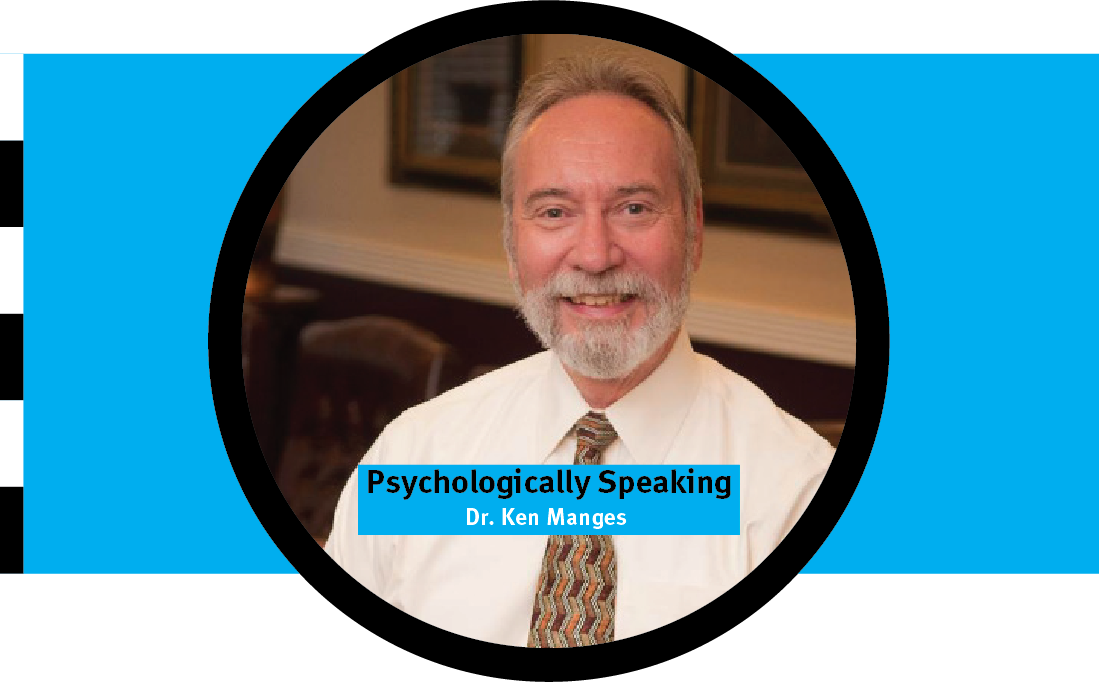
So, let’s travel the arc of putting ourselves back together. In the spirit of this holiday season, and from someone who has struggled himself and watched, coached and counseled others try to make sense of it all during times of duress, let’s take a second look at gratitude.
1. The Brain: The Original Survivalist
If you ever want to understand your own mood, motivation or 3 a.m. overthinking spiral, you don’t need a wellness retreat — you need to understand the brain’s operating system.
And here’s the short version:
Your brain is not trying to make you happy. It’s trying to keep you alive.
This is a wonderfully efficient strategy in the wilderness and a slightly problematic strategy during Thanksgiving dinner.
The brain is designed to scan for threats like:
– Is that a bear?
– Is that a cliff?
– Is that my uncle saying something about politics again?
The amygdala — our neural smoke detector — lights up fast. Too fast. Research from the American Psychological Association continues to show that people are living with chronically elevated stress responses, even in everyday situations. Chronic stress becomes the default, the “norm,” the background hum. When stress stays on too long, the brain inches into survival mode, bracing for impact even when no impact is coming.
And this matters for gratitude.
Because you cannot feel thankful when your brain thinks you are in danger.
Even if the “danger” is nothing more than a packed schedule, an argument, a worry or a self-critical thought masquerading as a fact.
A brief professional anecdote — anonymized, as always
Years ago, a client — let’s call him L. — came in during a particularly rough stretch at work. He described feeling “jump-started,” “fried,” “always on alert” and in the vernacular of the day “a type A personality.” He kept waiting for the next crisis, the next email, the next shoe to drop.
The interesting part?
There wasn’t a shoe.
His brain had just trained itself to brace for one.
When we talked about gratitude as a way to rewire his “danger defaults,” he looked at me with the face people make when they think a psychologist has just suggested lighting a scented candle to solve trauma.
But the research holds: gratitude works precisely because it interrupts the survivalistic loop. It calms the amygdala. It engages the prefrontal cortex — the rational, regulating, planning region. It gives the brain an anchor.
And when L. started practicing micro-gratitude — not the big Thanksgiving-style “I’m grateful for family and health” declarations, but small sensory moments — it changed his internal settings.
He didn’t need epiphanies. He was helped with one small way back into more calming and grounded everyday experience.
Which leads us directly to the next part of the arc.
2. Turbulence: Why We Feel Shaken (Even When Everything Looks “Fine”)
Turbulence is one way the world has of shaking our daily grind. Sometimes it’s external — job loss, caregiving stress, finances, illness, conflict. Sometimes it’s internal — old trauma, anxiety, overload, loneliness.
Sometimes it’s both.
But turbulence doesn’t need to be catastrophic. When cumulative it can feel overwhelming. A surprising finding from Gallup’s recent global well-being data (Gallup’s “State of the World’s Emotional Health” 2025 report showed that negative emotions — including stress — remain high globally, even though many people continue to report positive life evaluations or satisfaction and 37% of adults reported feeling a lot of stress “yesterday”).
In other words: modern turbulence doesn’t need drama. It just needs accumulation.
The brain interprets “too much for too long” wears us down and leaves us feeling more vulnerable with a sense of angst.
And this time of year, turbulence hides in plain sight:
– End-of-year deadlines
– Social obligations
– Decision fatigue
– Caregiving pressures
– Financial strain
– Seasonal affective dips
– Holiday expectations
– Emotional “family patterns” (the American Psychological Association dictionary describes family patterns as patterns or elements ranging from nonconscious to fully realized, including pathogenic interactions).
Another light anecdote
A colleague told me a story about a client who described November as “every emotion trying to get on the same escalator at once.” I’ve never heard a more accurate description of seasonal turbulence.
Turbulence is not the problem. The confusion about turbulence is that people think it means they’re doing something wrong. But turbulence is simply the brain’s way of saying:
“You’re carrying a lot, and I need a moment to organize the files.”
Our goal isn’t to eliminate turbulence; it’s to stay steady inside it. Like my son who is a pilot for Delta announcing to his passengers, “We’re going through a bumpy patch, folks — it’s normal.” The plane isn’t crashing. It’s just shaking.
And inside that shaking, we have one powerful tool: micro-gratitude.
As an aside, focusing on the goal, i.e., not responding to stress is of course our ultimate objective. But focusing on the destination is not helpful. Having a process, if you will a travel plan (keeping with our “arc” analogy), is the best way to get to where we are going, i.e., not responding to cumulative stress.
3. Micro-Gratitude: The Psychology of Small, Steady Thankfulness
Most people misunderstand gratitude because they picture it as a grand emotional flourish — something Oprah might announce from a mountaintop while the sun pierces the clouds.
But gratitude is, in reality, much smaller. Neurologically quieter. More private. More sustainable.
Micro-gratitude is the practice of noticing tiny, sensory-based positives that stabilize the nervous system.
It sounds like:
– “The coffee is warm.”
– “The dog is asleep at my feet.”
– “The light through the window looks nice.”
– “This chair feels comfortable.”
– “The room is finally quiet.”
– “Someone held the door for me.”
– “The oatmeal didn’t burn.”
– “I survived the meeting.” (The bar is sometimes low. That’s fine.)
These aren’t monumental revelations. They’re mini markers bringing us back to the present moment.
Why micro-gratitude works (neuroscience version)
When we focus on small positive cues:
– The prefrontal cortex becomes more active
– The sympathetic nervous system quiets
– The parasympathetic (calming) system opens
– Cortisol drops
– Emotional regulation increases
– Perspective widens
This widening is the key. Micro-gratitude gives the brain room to think, “Maybe things aren’t as catastrophic as they felt a moment ago.”
The positive psychology research (Yang, Zhang, Li, Jia & Kong, 2024 in the “Journal of Positive Psychology”) found when 153 college-aged participants were asked to note feelings of gratitude, there were several side effects, 1. they also reported higher resilience, 2. greater perceived social support and 3. an increase in their feeling of well-being.
In other words: gratitude doesn’t fix the world. It adjusts the lens we’re looking through. Which often makes the world feel more navigable.
One more anecdote before we move toward the Thanksgiving arc
A middle-aged caregiver I saw once — let’s call her J. — was balancing work, aging parents, teenage kids and an inbox that looked like a mathematical proof. Her anxiety was constant.
I asked her to spend one week identifying just three micro-gratitudes a day. Nothing fancy. No journaling. No philosophizing. Just naming small things out loud.
The next week, she sat down and said, “The laundry is still overwhelming. My schedule is still insane. But I’m breathing again.”
That’s the power of micro-gratitude. It doesn’t remove the turbulence. It helps you ride it out. It’s a lot like not battling the waves but riding them up and down as you enjoy the feelings of being in the water.
And it sets the stage for the part we rarely talk about: the Thanksgiving Reset.
4. The Thanksgiving Reset: A Seasonal Opportunity the Brain Actually Likes
Thanksgiving, to many people, is a meal, a tradition or a day off. But psychologically, it can be something far more important: a built-in annual reset button.
Not a forced “be grateful now!” command, but a moment where the culture gives us permission to slow down long enough for gratitude to land.
In the gratitude survey literature, a consistent pattern emerges:
People feel more grounded and emotionally balanced when they mark transitions — birthdays, anniversaries, holidays — not because the day itself is magical, but because rituals give the nervous system structure. It gives us time to reflect, be nostalgic, look over the scheme of things and legitimizes our taking a breath.
Thanksgiving as an event or yearly mile marker provides three important conditions that support a reset:
1. A Pause
Even if it’s brief. Even if it’s messy. Even if someone forgets the rolls in the oven. The pause reminds the brain that life is not one unbroken chain of urgency.
2. Orientation
We look back on the year — what held us together, what surprised us, what nearly unraveled us — and we make meaning from it. Our brain likes patterns, connections and meaning. It’s how we view our landscape and how we can heal.
3. Connection
Whether you celebrate with family, friends, colleagues, neighbors or a very content cat, human connection regulates the nervous system faster than any individual coping skill.
These three conditions create an ideal environment for gratitude to actually take root — not as a duty, but as a return.
The Reset Moment
For many people, the Thanksgiving Reset looks like the first deep breath they’ve taken in months. The brain shifts gears:
From vigilance → to reflection.
From scarcity → to noticing.
From survival → to appreciation.
Not because everything is suddenly perfect, but because the body finally slows down enough to sense what’s still good.
But this leads to a crucial part of the arc…
5. The Bridge Between Turbulence and Peace Is Not Big Gratitude — It’s Small Attention
People often assume that gratitude is supposed to feel enormous — like inspiration, joy, uplift.
But in the science of well-being, gratitude is more like steady maintenance.
Not fireworks.
Not epiphany.
Just calibration.
Think of your emotional system like a compass. Turbulence pulls it in 10 directions at once. Micro-gratitude gives us a sense of true north.
When we practice micro-gratitude consistently, the Thanksgiving Reset becomes more than a day — it becomes a pattern.
The brain learns:
– I can ground myself.
– I can find something small that’s okay.
– I can come back to center.
– I can make meaning from chaos.
Meaning is everything and a powerful support for continued emotional resilience.
6. A Gentle Seasonal Reflection: What the Year Has Asked of You
Take a moment (yes, now) and consider this question:
What did this year require of you that you didn’t know you had in you?
Maybe patience.
Maybe strength.
Maybe vulnerability.
Maybe creativity.
Maybe endurance.
Maybe the ability to show up when you were tired, or comfort others when you felt uncertain or make decisions when nothing had a clear answer.
This, too, is the Thanksgiving Reset: acknowledging what you’ve carried.
Gratitude isn’t only about appreciating what you have.
It’s also about appreciating what you survived!
7. How to Use Micro-Gratitude to Make the Thanksgiving Reset Last
Here are five practical, strategies to turn this seasonal moment into something sustained:
1. Use “Sensory Anchors”
Pick one sensory detail each morning: the sound of running water, the warmth of the shower, the smell of breakfast, the feel of your clothes, the weight of a pen as you write.
This is micro-gratitude’s power source.
2. Practice “One Good Thing” in Turbulent Moments
When stress spikes, identify a single good thing in the room. Not in the universe. Not in your life story. Just in the room.
Your brain needs specifics, not poetry.
3. Use Transitions as Gratitude Cues
Choose one of the following or two if you’re adventurous and use then as a cue to feel gratitude:
– switch tasks,
– finish an email,
– enter your car,
– stand up from your desk,
– close a door —
pause and say aloud if you’re brave (or whisper if you’re on the quiet side) what you’re doing…
I feel grateful when…. It takes three seconds and rewires neural patterns.
4. Share Micro-Gratitudes Out Loud
When brave, the research shows you will be rewarded. It shows gratitude multiplies when verbalized. Say it to a coworker, partner, friend, even a pet.
(I thank Alexa for setting my tea timer in the evenings).
5. Let Small Things Count
If the brain is allowed to count only the “big stuff,” you will continue to conclude your life is lacking.
Let the small stuff matter.
That’s where the regulation happens.
8. A Closing Thanksgiving Thought: The Brain, the Storm, and the Quiet Good
If the last year has felt bumpy, unpredictable or heavier than you expected, that doesn’t mean you’ve failed. It means you’re human.
Your brain was built to scan for danger before it notices the good.
Your life was built to include noise, conflict, pressure and unexpected turbulence.
But your humanity includes something remarkable: the ability to notice small pockets of steadiness even in the storm.
The Brain → Turbulence → Micro-Gratitude → Thanksgiving Reset arc is not a holiday gimmick. It’s an emotional blueprint.
And the best part of the blueprint is this:
You don’t need the world to calm down in order to feel calmer.
You just need one moment of noticing.
So as Thanksgiving approaches, may you find:
– three small things to appreciate each day,
– one moment to breathe,
– one pause that feels like relief,
– and one internal message — quiet but steady — reminding you that you have come through everything you thought you couldn’t.
Gratitude isn’t the reward.
It’s the way back to yourself.
And this season, that may be the most meaningful reset of all.
References available on request.
Thank you for reading the column. I hope you enjoyed this abbreviated part of a book on gratitude I will be publishing in the fall of 2026. Let me know if you’d like an advanced copy by emailing me at drmanges.com. Send your comments too. See you here next month.