
Courtesy of JTA. Photo credit: Anna Moneymaker/Getty Images
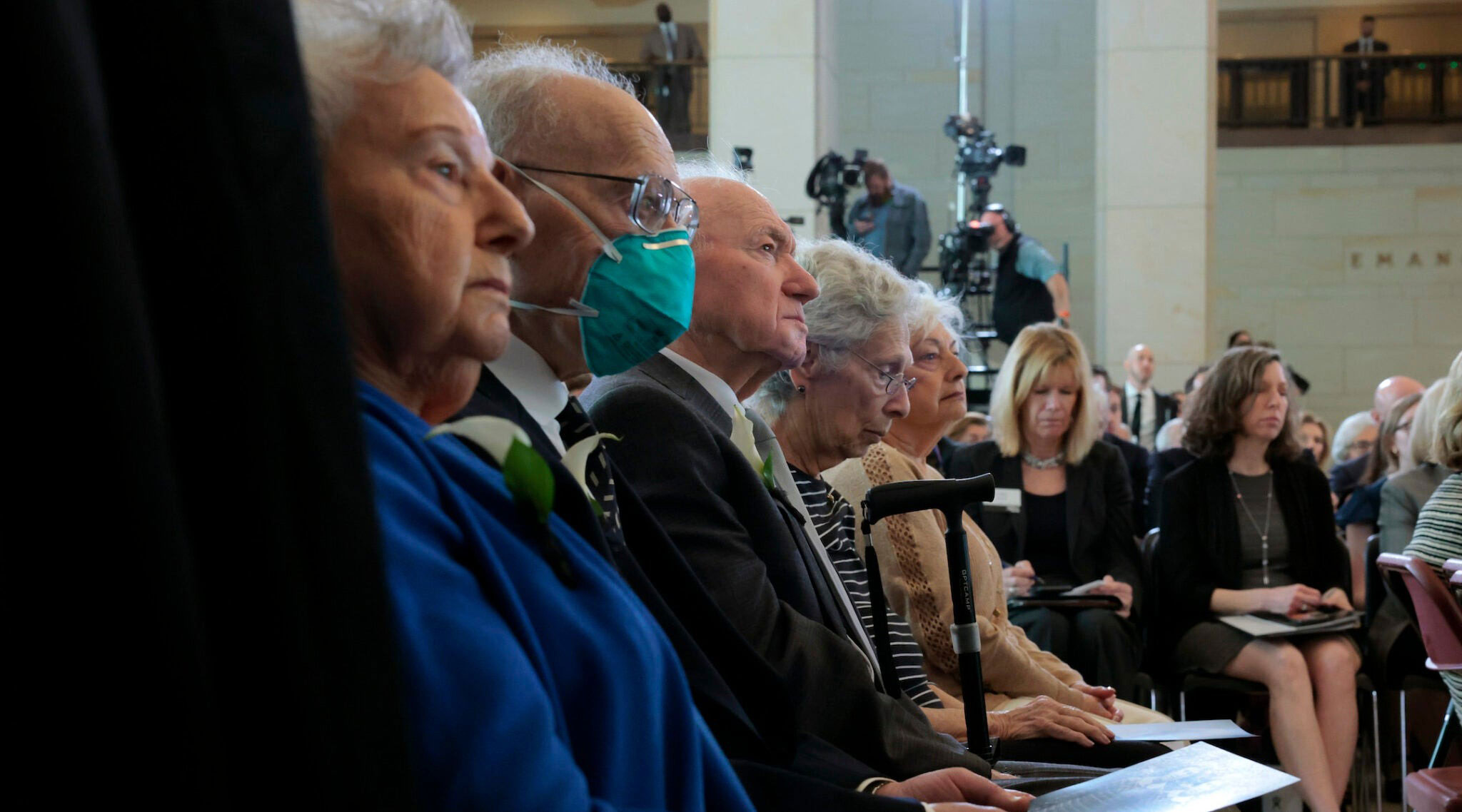
Holocaust survivors look on during the U.S. Holocaust Memorial Museum’s Annual Days of Remembrance ceremony at the U.S. Capitol on April 23, 2025 in Washington, DC; the annual commemoration honors Holocaust victims and survivors and features guests including members of Congress, White House officials, the diplomatic corps and community leaders
(JTA) — A 100-year-old Holocaust survivor in Skokie, Illinois received a surprising notice last year from the Social Security Administration: The government was demanding a refund.
The survivor, who is on a program for low-income seniors called Supplemental Security Income, was told she had been making too much money to continue to qualify. As a result, the letter said, her Social Security payments — her only source of income — would be garnished going forward.
A case worker from a local Jewish organization alerted the woman, who recently moved to the United States from Ukraine and speaks no English, to the problem.
The caseworker also understood immediately what was happening: The supposed extra money that made the survivor ineligible for SSI came in the form of restitution payments for victims of Nazi persecution — which legally cannot be counted as income. An effort to fix the problem immediately began.
“They’ve been withholding money to her,” said her attorney Stacey Dembo, who took on the survivor’s case pro bono through the Skokie-based Council for Jewish Elderly and the Jewish United Fund of Chicago. “I feel a lot of time pressure because of her age.”
The story of this survivor, whom JTA is not naming at the request of her counsel, offers a peek at a troubling pattern that has persisted for decades: low-income Holocaust survivors being denied Social Security payments owing to a specific bureaucratic error that affects only them.
The problems have historically been resolved by persistence on the part of their attorneys. But Dembo said the Trump administration’s gutting of the Social Security Administration has made it harder for her to achieve redress for Holocaust survivors. Under the Department of Government Efficiency, the Social Security Administration expects to cut about 12% of its workforce — around 7,000 jobs — and shutter dozens of its field offices, even as the agency has instituted new rules requiring recipients to visit the offices in person to resolve disputes.
“It’s clear they just don’t understand. They don’t care to understand,” Dembo said. In the past, she said, she could just “send a letter and fix the problem.” But now, with so many personnel cuts at the department, “you’re kind of screaming into the void.”
The Social Security Administration did not respond to questions sent to its press office for this story.
The problem is rooted in the historic catastrophe visited upon European Jews — and the historic reparations negotiated on survivors’ behalf.
After the Holocaust, the Conference for Material Claims Against Germany, known as the Claims Conference, and other groups pursued compensation for the relatively small number of Jews who survived the Nazis’ campaign of extinction. Each year since 1952, the conference has negotiated a pot of funds to support survivors and, increasingly, Holocaust education. Last year, the tally was $1.5 billion.
The Claims Conference says there were about 34,000 Holocaust survivors living in the United States last year — of whom, according to the nonprofit Blue Card, a third live in poverty. As with all Americans whose income is below a certain threshold, these survivors are entitled to SSI, a form of Social Security reserved for low-income and disabled adults.
The payments from Holocaust reparations groups can sometimes on paper push these survivors’ incomes just above the monthly SSI limit.