
Efrat, Israel — “And he said, ‘Your name will no longer be called Jacob, but Israel, for you have striven with G-d and with men, and have prevailed.’ And Jacob asked him and said, ‘Tell me, if you would, your name.’ ‘Why do you ask after my name?’ And he blessed him there. And Jacob called the name of the place Peniel because I have seen G-d face to face and I have survived.” [Genesis 32:29–31]
The article below is from Rabbi Riskin’s book, “Bereishit: Confronting Life, Love and Family,” part of his “Torah Lights” series of commentaries on the weekly parsha.
Is it religiously valid to attempt to find one’s own G-d — or is it sufficient to accept the G-d idea handed down by parents and/or tradition? Certainly, if the individual can develop his own unique contact with G-d, his divine service will be genuine and spontaneous, rather than mechanical and formal. But a search, after all, is fraught with pain and anguish. And what if the Almighty still remains elusive, even after a lengthy quest?
We begin the Amida prayer with the words: ‘Praised art thou, our G-d and G-d of our fathers.’ Rabbi Yisrael Ba’al Shem Tov explains that it is preferable and worthy to attempt to discover one’s own G-d and to establish a personal relationship with Him. Until that occurs, however, one must still serve the G-d of one’s fathers.
In studying the biblical portions of Toldot, Vayetze and Vayishlach, we can trace an undeniable pattern which reveals that the underlying theme in Jacob’s life is his search for G-d — his G-d, and not only the G-d of his father.
One might suggest reasons as to why, at least in Jacob’s case, the mere acceptance of his father’s G-d would be difficult, if not impossible. If Jacob truly felt unloved, even rejected, by Isaac, it would be problematic for him to connect with his father’s G-d. And when his mother’s ploy deceives his father, this would only serve to intensify the anguish of separation from the patriarch that Jacob must feel. Jacob wasn’t sure who he really was, or more importantly, who he wished to become. After all, if his father loved Esau, perhaps he should become more fork-tongued and aggressive, more Esau-like. Perhaps then he would gain his father’s love and G-d’s love!
Jacob’s jealousy and guilt vis-a-vis Esau certainly got in the way of his ability to establish a meaningful relationship with the G-d of his father Isaac. It is certainly the wrath of his brother Esau that forces the underlying purpose of Jacob’s journey to become a personal search for G-d and — if only subconsciously — the G-d of his mother in her birth-place. After all, if his father had rejected him, at least his mother accepted him. Moreover, his mother’s family was much more Esau-like — cunning and smooth-tongued — than his father’s.
The first episode recorded when he leaves home is the dream of the ascending and descending angels in which G-d suddenly appears to Jacob. The words G-d chooses are significant: ‘I am the Lord, G-d of Abraham, and the G-d of Isaac…’ [Gen. 28:13]. But not yet the G-d of Jacob.
How does Jacob respond when he awakes? ‘Surely G-d is in this place, and I did not know’ [Gen. 29:16]. The general understanding of this verse is that Jacob, not realizing that G-d is in this place, is taken by surprise. But the simple meaning of ‘lo yodati’ is that Jacob does not yet know Him, his G-d. He knows what he must do to serve Him and he knows what to say in order to pray to Him, but he has not yet experienced his own personal G-d. We see this point underscored when Jacob makes his vow, which is usually understood to mean that if G-d will feed and clothe him, then Jacob will accept the Lord as his G-d [Gen. 28:20, 21]. Obviously it is difficult to accept such a materialistic ‘deal’ with the divine. Perhaps we must view the phrase in question as belonging to the ‘if ’ clause of the oath; ‘if G-d will…guard me, give me bread to eat…and I return in peace to my father’s house and if the Lord will become my (li) personal G-d, then this stone will…become a House of G-d….’ Jacob is asking for a personal G-d, that the Lord become his G-d. Jacob is asking, in addition to his physical needs, that G-d provide him with his most sought after spiritual need, that he experience a personal G-d. Then Jacob will know that his search shall have borne fruit, and he will be able to truly build a house for G-d and give tithes.
But in order for Jacob to find his personal G-d, he must first come to grips with his own personality, with his own inner and truest self and identity. He must discover who he is before he is to find his G-d.
For the next twenty years Jacob lives with Laban’s household. In the process of raising a family and establishing a financial foothold, he loses sight of his earlier spiritual vision. He is more Esau than Esau, more Laban than Laban. Not only does he not find his own G-d, he runs the risk of even losing the G-d of his father. Although he is very successful and aggressive, he has lost, and deeply misses, his earlier dream of uniting heaven and earth. He knows he must return to his father’s land and home, to his true self. When we next find him making an oath, it is with Laban upon his departure. But he still cannot speak of his own G-d, the G-d of Jacob; he can only take an oath by ‘the G-d of Abraham and the Fear of Isaac’ [Gen. 31:53]. Now he knows who he once was and must once again become — but he isn’t there yet.
Ultimately, Jacob understands that he cannot successfully find G-d without first being himself — and that requires frontal confrontation with Esau. Will Esau stand in the way of G-d’s promise to Jacob and his seed? Can Jacob atone for the guilt he feels vis-a-vis Esau, and exorcise the jealousy he feels towards this favored brother? Addressing G-d, Jacob says, ‘O G-d of my father Abraham, and the G-d of Isaac…’ [Gen. 32:10], but still no mention of the G-d of Jacob.
And because of what follows, it becomes clear that the wedge between Jacob and himself, between Jacob and his G-d, was Esau. Only after Jacob can successfully separate himself from Esau will he be able to confront his own G-d. On the night before he is scheduled to meet his brother in the flesh, the Torah records how Jacob remained alone and wrestled with an unidentified stranger over whom he prevailed. Identified by our Sages as the spirit of Esau, Rabbi S.R. Hirsch suggests that it may well have been the Esau within Jacob who is haunting the patriarch with guilt and jealousy.
Jacob receives the victory name Yisrael (Israel) from the stranger; he has prevailed against men and G-d. In what way? He has finally confronted the twin personality within himself: the Esau he desired to become in order to try and gain his father’s favor and achieve momentary materialistic enjoyment — and succeeded in removing Esau and Esauism from within himself. He is ready to take the wealth he received from Laban during his Esau stage and return it to Esau when they meet on the morrow: ‘take my blessing’ (which I received under false pretenses) he will say — and he is ready to accept himself as he was even vis-a-vis his father. He is therefore ready to return home not as Jacob-Esau but as Jacob-Israel.
And only after he has successfully wrestled with the stranger — exorcising the pain and guilt created by his jealousy and deception — is Jacob finally rewarded by seeing G-d face to face. Apparently it was Esau, or the spiritual struggle he symbolized, that had previously stood in his way. After his mastery over the spirit of Esau, Jacob calls the place of the encounter Peniel, ‘because I have seen the Lord face to face, and my soul has been saved’ [Gen. 32:31]. Jacob exorcised Esau — and in the process found both himself and his G-d. His struggle and search ended in victory.
If what we’ve been describing is correct, we should now be presented with Jacob’s personal G-d. The text describes that Jacob ‘…came in peace [shalem] to the city of Shekhem…’ [Gen. 33:18]. The verse can also read ‘whole’ — and indeed he is now his whole, complete and independent self. And so he erects an altar to his own G-d, indeed calling it ‘Kel Elokai Yisrael’ [Gen. 33:20] G-d, the G-d of Israel. Finally G-d is not just the G-d of his grandfather and of his father, but He is also the G-d of Israel, the G-d of the pristine and purified Jacob, his own personal G-d, whom he has discovered after many travels and through much pain. The circle is complete, the search for his own G-d is over. Thus empowered, Jacob is ready to face the third stage of his life, the transformation of twelve sons into twelve tribes of Israel. And now we can pray in the Amida to the personal G-d of each of our patriarchs, the G-d of Abraham, the G-d of Isaac and the G-d of Jacob.
Shabbat Shalom
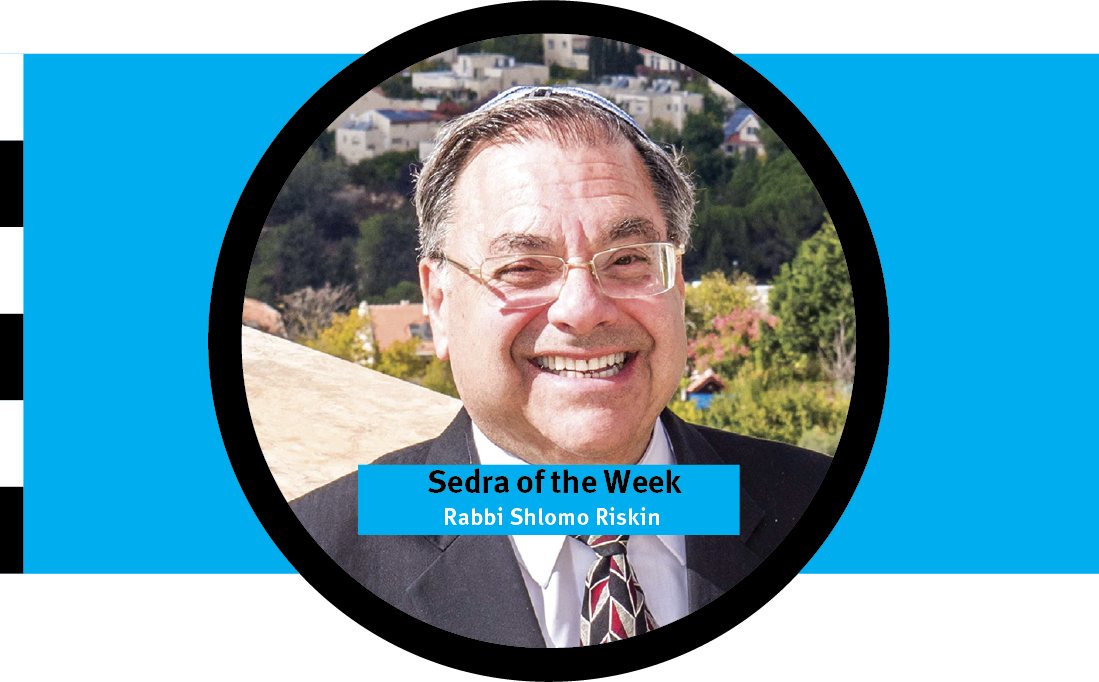
Rabbi Shlomo Riskin
Founder & Rosh Yeshiva,
Ohr Torah Stone
Founding Rabbi of Efrat