Courtesy of JTA. Photo credit: JTA Graphic
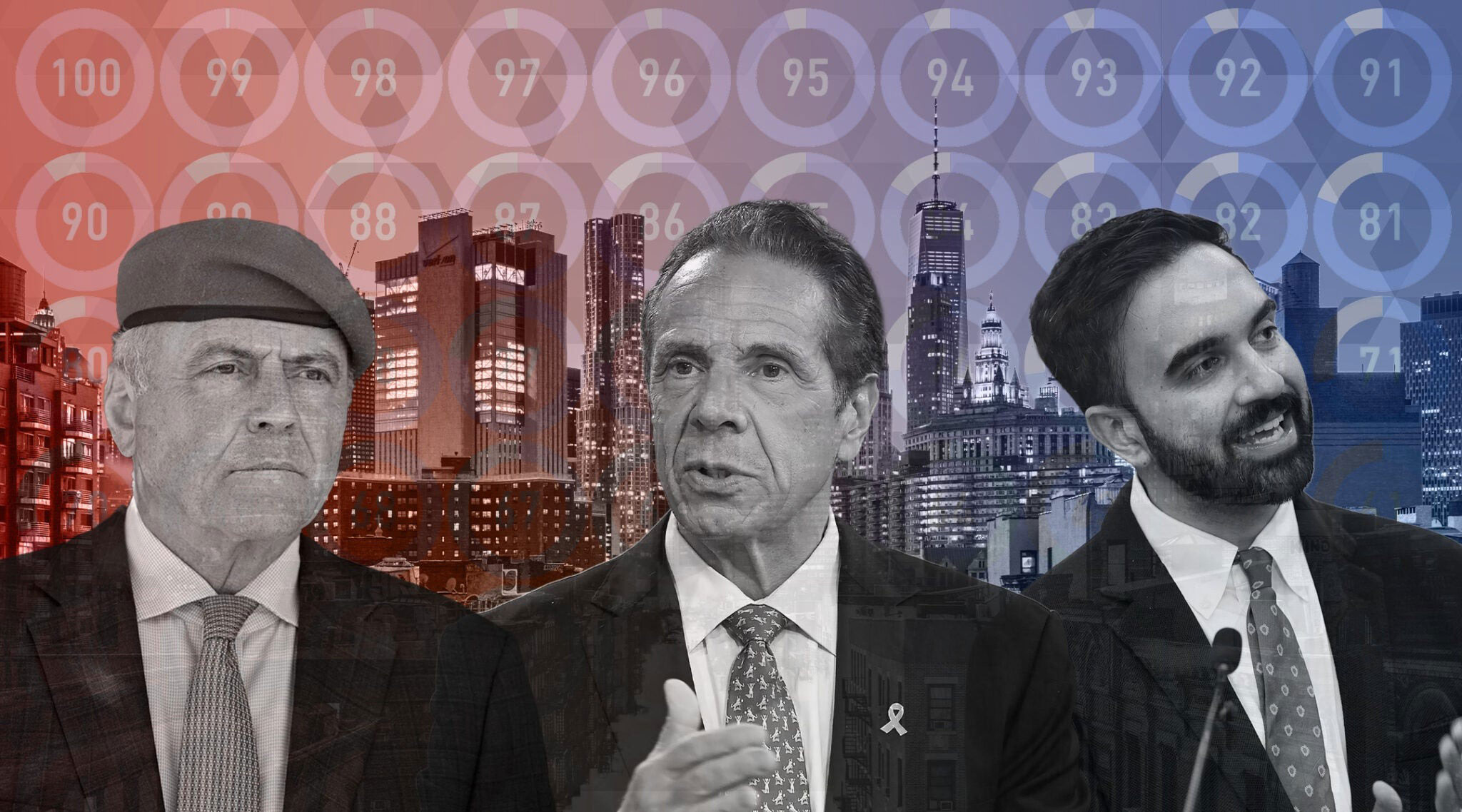
The New York City mayoral candidates
(JTA) — Andrew Cuomo and Curtis Sliwa teamed up against Zohran Mamdani several times during the final general election debate October 22. They accused him of being unready to combat antisemitism and too inexperienced to govern, and both jeered at him for dodging questions about housing measures that will be on the ballot.
Mamdani promised to be a mayor “who doesn’t just protect Jewish New Yorkers, but also celebrates and cherishes them.” He said that in addition to increasing funding for hate crime prevention programs and boosting synagogue security, he would implement a school curriculum that teaches students “about the beauty and breadth of the Jewish experience.” (Such a curriculum became available to schools this year.)
Cuomo retorted, “You’re the savior of the Jewish people? You won’t denounce ‘globalize the intifada,’ which means ‘kill Jews.’” (Mamdani declined to condemn the protest slogan during the primary, but since repeatedly said he would discourage the term and acknowledged that it incited fear among some Jews.)
Cuomo also referenced an open letter released October 22 from rabbis across the country, who said that a Mamdani victory would threaten “the safety and dignity of Jews in every city.” Over 800 rabbis have now signed the letter.
Sliwa also butted in to say that his sons were among the Jewish New Yorkers unconvinced by Mamdani’s promise to fight antisemitism. “Let me speak on behalf of my two sons,” said Sliwa. “When they’ve heard some of the statements you’ve made, like in support of global jihad — and I hear some people out there saying that ‘Jews, their time is due,’ which means the same thing — they’re frightened, they’re scared.”
Mamdani clarified that he had “never, not once, spoken in support of global jihad.” He said the incorrect attribution of that stance to him was related to “the fact that I am the first Muslim candidate to be on the precipice of winning this election.”
Mamdani also says he wants to keep NYPD Commissioner Jessica Tisch in her role if he is elected. Tisch, a billionaire heiress from a prominent Jewish family, has won praise from the rank and file as well as politicians of both parties, though some progressives have called to remove her.
The move signals Mamdani’s continued push to broaden his support among moderates, business leaders and other New Yorkers who are skeptical about his past stances against the police. It could also reassure some Jewish voters of their safety under his mayoralty.
A series of open letters and statements from prominent Jews have targeted Mamdani in recent days.
The anti-Mamdani letter signed by hundreds of rabbis, which Cuomo cited during the debate, reinforced recent statements by New York City rabbis Elliot Cosgrove and Ammiel Hirsch. Rabbi Joshua Davidson, who leads New York’s Emanu-El congregation where former Mayor Michael Bloomberg is a member, also released a video raising concern about Mamdani’s Israel views.
Outside of clergy, Andres Spokoiny, CEO of the Jewish Funders Network, appealed to liberal Jews to reject Mamdani in a public letter published in the Times of Israel. He argued that “Trump and Mamdani belong to the same populist revolt against liberal democracy, even if they approach it from opposite poles.”
And in The New York Times, journalist Bret Stephens penned an op-ed titled “Why Mamdani frightens Jews like me,” calling the frontrunner “a longtime anti-Zionist of a peculiarly obsessed sort.”
Mamdani wrote his own letter to Hasidic voters in Yiddish, published in the city’s weekly Yiddish-language newspapers this week.
He said that he hoped Jews had a “happy, beautiful and relaxing holiday season” before addressing his plan for public safety, affordability, childcare and combating antisemitism, according to translations by Rabbi Abby Stein, a progressive activist and Mamdani supporter.