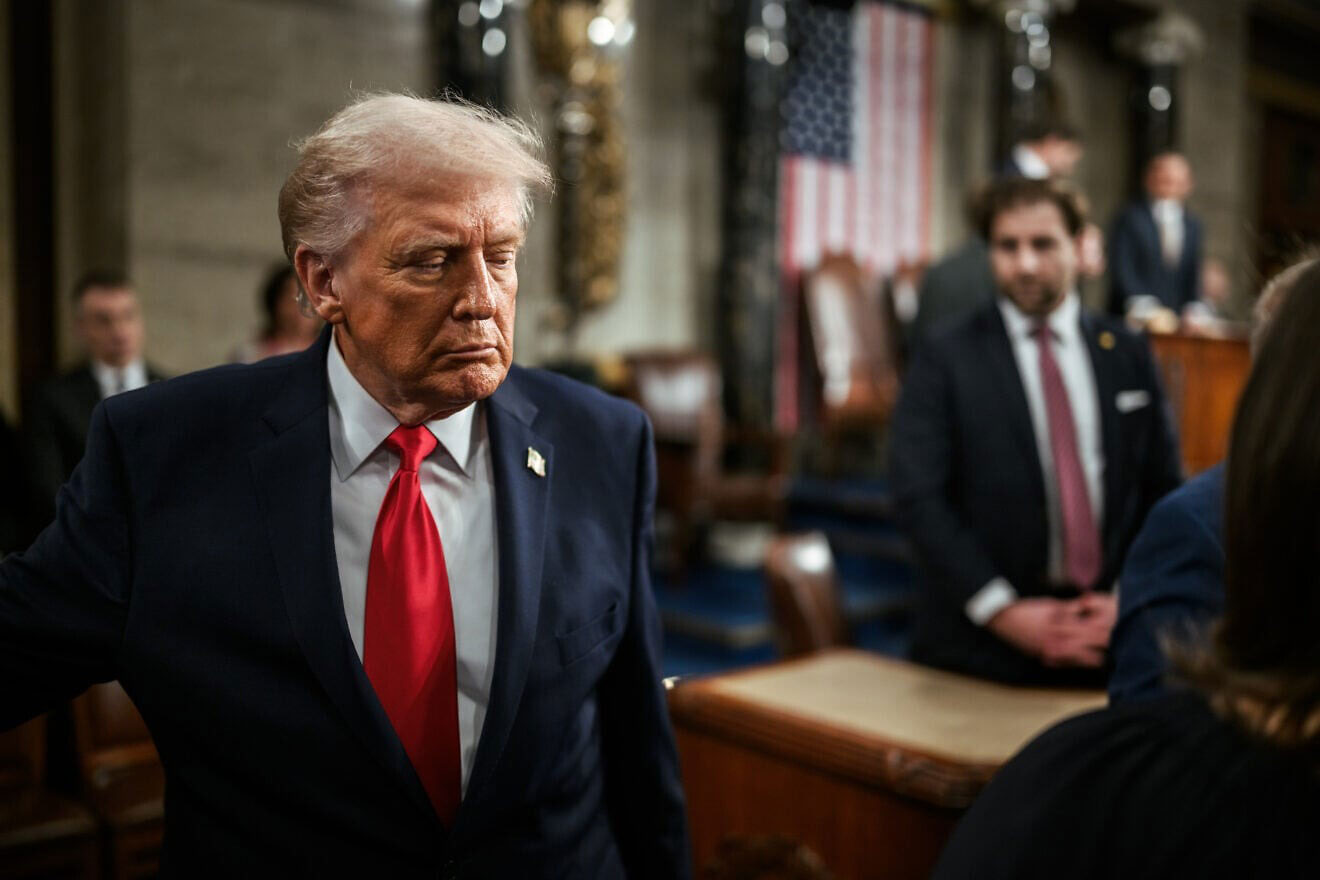
Courtesy of JNS. Photo credit: Molly Riley/White House
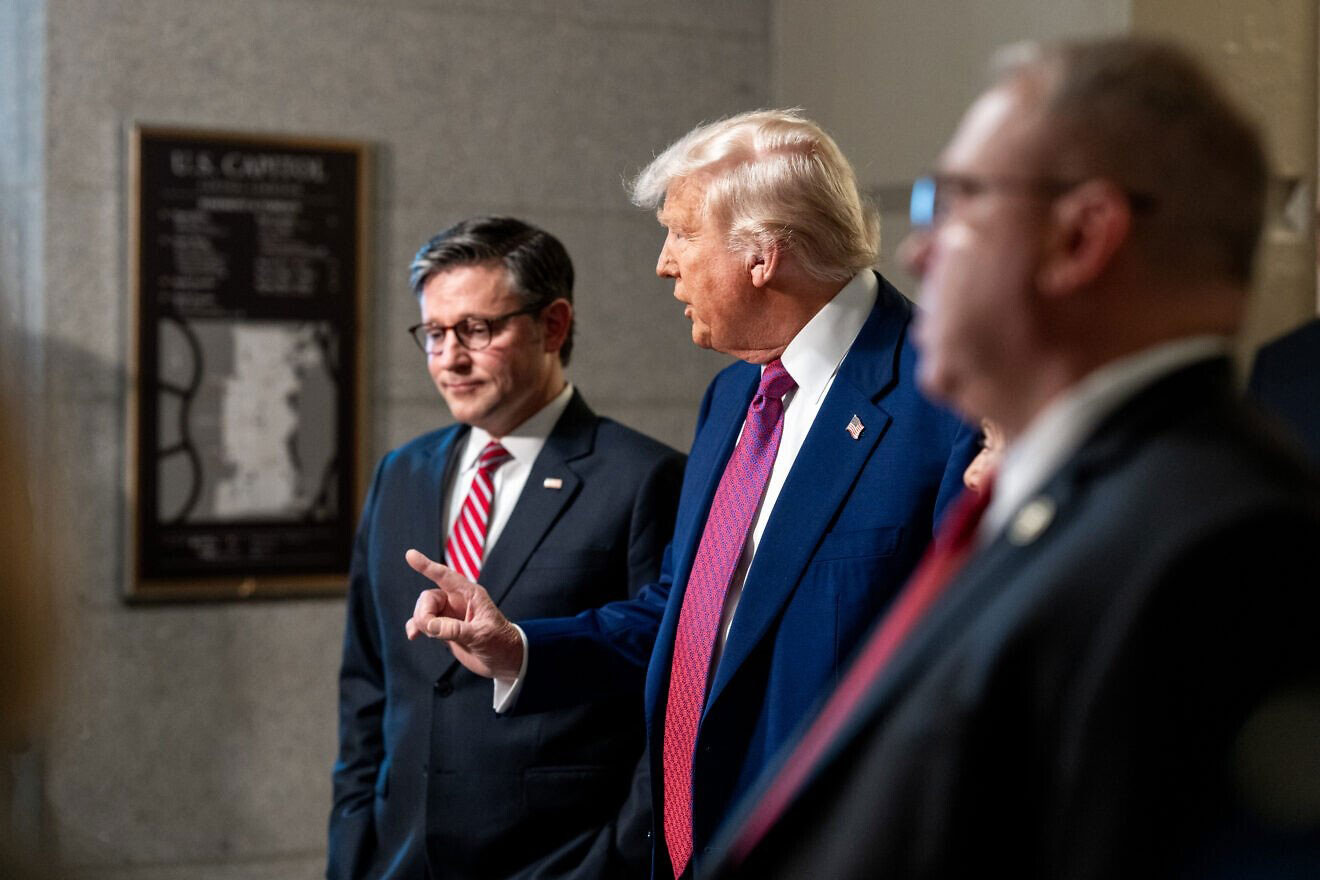
U.S. President Donald Trump and House Speaker Mike Johnson (R-La.) speak to members of the media at the U.S. Capitol in Washington, D.C., before meeting with the House GOP Conference about passing his budget bill, May 20, 2025
(JNS) — After the Jewish Federations of North America pushed back unsuccessfully against proposed cuts to federal funding for health and nutrition programs in what U.S. President Donald Trump has called the “biggest tax cut in history,” the Federation intends to see how severe the reductions that Congress just approved truly are.
“When you look at the size and scope of changes around Medicaid and the food insecurity piece, there are a number of concerns,” David Goldfarb, senior director of the Federation’s Strategic Health Resource Center, told JNS.
Trump told reporters on Thursday that he plans to sign the bill on Friday afternoon at 5 p.m. with “B2s and other military planes” flying overhead, per the pool report.
“We’ll be signing with those beautiful planes flying right over our heads,” he said.
Goldfarb told JNS that the cuts in the bill will hurt poorer members of the Jewish community, whom his group spends millions to help. The Federation network allocated an estimated $170 million in 2022 to affiliated nonprofit health and human service providers, including nursing homes, home care agencies, family and children services and food pantries, he said.
The new tax bill, which passed along party lines, would cut Medicare spending by $1 trillion over 10 years and leave 11.8 million more Americans without health coverage, per the Congressional Budget Office.
Cuts to the Supplemental Assistance Nutrition Program, formerly known as food stamps, would reduce or eliminate benefits for as many as 5 million people, according to the Center on Budget and Policy Priorities. The bill could reduce spending by $186 billion over 10 years, it said.
Republicans insisted that they targeted waste, fraud and abuse in those programs.
“The One, Big Beautiful Bill restores fiscal sanity, cuts waste, fraud and abuse and secures the border,” stated Rep. Randy Fine (R-Fla.), who is Jewish. “That’s what I voted for in November, and that’s what I’m voting for today.”
Scott Bessent, the U.S. treasury secretary, stated that the Congressional Budget Office was wrong.
“Without this bill, we would face the largest tax hike in history and the CBO would project 1.8% growth. Even with full expensing for manufacturing equipment and historic tax relief, the CBO still projects only 1.8% growth,” Bessent said. “If you turn up the growth projections to 2.8%, which was achieved during President Trump’s first term, then the debt disappears.”
“We are growing GDP faster than debt and that trend will continue through the remainder of the president’s term,” Bessent said.
Goldfarb told JNS that fewer federal dollars means less money for nursing homes and home health care, for help for people with disabilities and less money for food, which could have a bigger impact on many members of the Jewish community given higher costs of kosher meals.
One in five Jewish households are financially vulnerable, and one in three Holocaust survivors live in poverty, according to Goldfarb.
“There is still a substantial need in our community,” he said, adding that increased charity can’t make up for the loss of federal funding. “The Federation understands that Medicaid and SNAP are core pieces on the social safety net that directly impacts our community.”
Most of the savings from cutting spending on programs that help the poor would be used to help offset the cost of tax cuts that strongly favor the richest Americans, per the Institute on Taxation and Economic Policy. More than 70% would go to the wealthiest 20% of taxpayers, while 1% would go to the poorest 20%, the institute said.
Sen. Elizabeth Warren (D-Mass.) called the bill’s impact “the largest transfer of wealth from the poorest to the richest in our nation’s history.” The bill would increase the federal debt by $4.1 trillion over the next 10 years, according to the Committee for a Responsible Federal Budget.