Courtesy of JNS. Photo credit: Rabin Medical Center
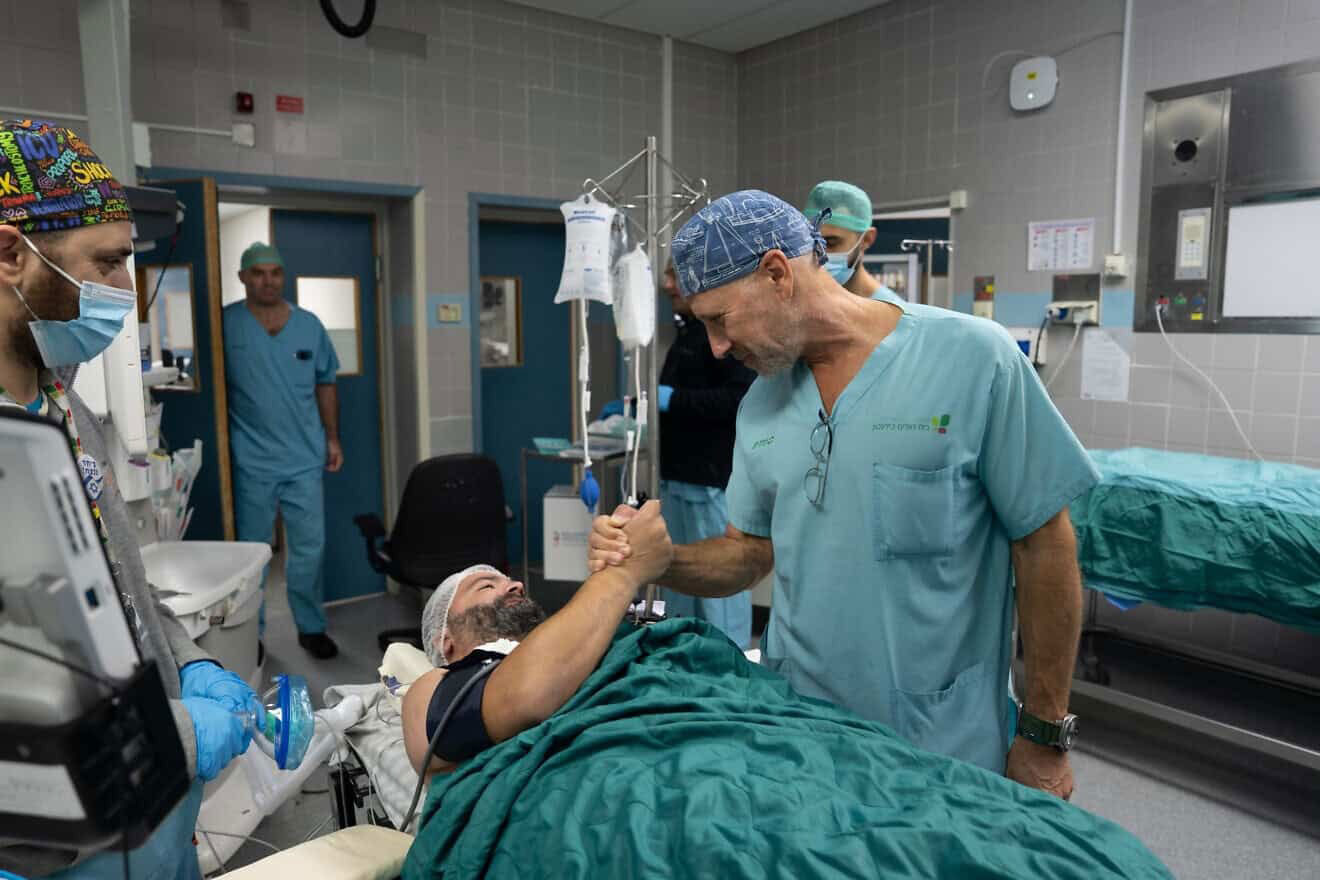
Dr. Eviatar Nesher and patient Daniel Haim Biton at Rabin Medical Center, December 2025
(JNS) — Doctors at Rabin Medical Center in Petach Tikva have successfully performed a rare and complex small-intestine transplant on Daniel Haim Biton, a 36-year-old man who had lived for 17 years without a functioning digestive system, the hospital said in a press release on Dec. 4.
The seven-hour surgery gave Biton, who has depended on intravenous total parenteral nutrition since age 19, the chance to live without medical devices or dietary restrictions for the first time in nearly two decades. He is currently hospitalized in stable condition in the general intensive-care unit and is awake.
“This is one of the most complex and rare procedures in modern medicine,” said surgeon Dr. Eviatar Nesher, who led the transplant operation. “Daniel is a true fighter. His resilience moved all of us. Thanks to the generosity of the donor family, he now has a real chance to live fully again.”
The hospital said the transplant was made possible thanks to the organ donation of a 6-year-old boy, who died from complications of the flu, and whose parents chose to donate his organs to save lives.
The intestine was retrieved by Nesher together with his deputy, Dr. Vladimir Tennak, and Dr. Fahim Kanani. The operation itself was performed by Nesher and senior transplant surgeon Dr. Aviad Gravetz.
Biton, a trained chef, grew up working in his father’s bakery and dreamed of a culinary career. Shortly before enlisting in the Israel Defense Forces, doctors discovered multiple polyps and tumors in his intestines. He underwent repeated surgeries, chemotherapy, removal of his intestines and creation of a stoma, followed years later by surgery to remove a liver metastasis.
“I lost the ability to truly eat,” Biton said. “I had no sense of taste, no feeling of fullness. I ate only to taste, but nothing was absorbed. This transplant gives me back the human experience of eating like everyone else. It feels like being born again.”
Though medical limitations repeatedly interrupted his career, Biton continued to work when possible, most recently as a sous chef at an events venue and assisting his sister, a chocolatier, with medical clearance.
“I want to cook again, travel the world without medical devices, start a family, open my own business — and most of all, eat and truly feel full,” he said.
Biton has been followed closely for years by a multidisciplinary team at Rabin Medical Center led by Dr. Marius Braun, director of the Liver Institute, along with specialists from the hospital’s Chronic Intestinal Failure Clinic and the Davidoff Cancer Center. The decision to proceed with transplantation was taken when long-term intravenous nutrition began posing serious risks.
Rabin Medical Center is responsible for approximately 70% of Israel’s organ transplants and is the only hospital in the country to have performed intestinal transplants. Previous procedures took place in 2014 and 2018. Biton’s operation marks the third such case nationwide.
An intestinal transplant is offered only as a lifesaving last resort for patients with severe intestinal failure when long-term intravenous nutrition can no longer continue due to liver failure, repeated infections or vascular complications. The surgery carries higher risks and lower long-term graft survival rates than most other organ transplants.
Following surgery, patients undergo prolonged intensive monitoring for rejection before gradually returning to solid food as digestive function is assessed.
For Biton, the medical breakthrough means more than survival. “I want a normal life,” he said. “To eat, to cook, and to become a father.”