Courtesy of JNS. Photo credit: Yonatan Sindel/Flash90
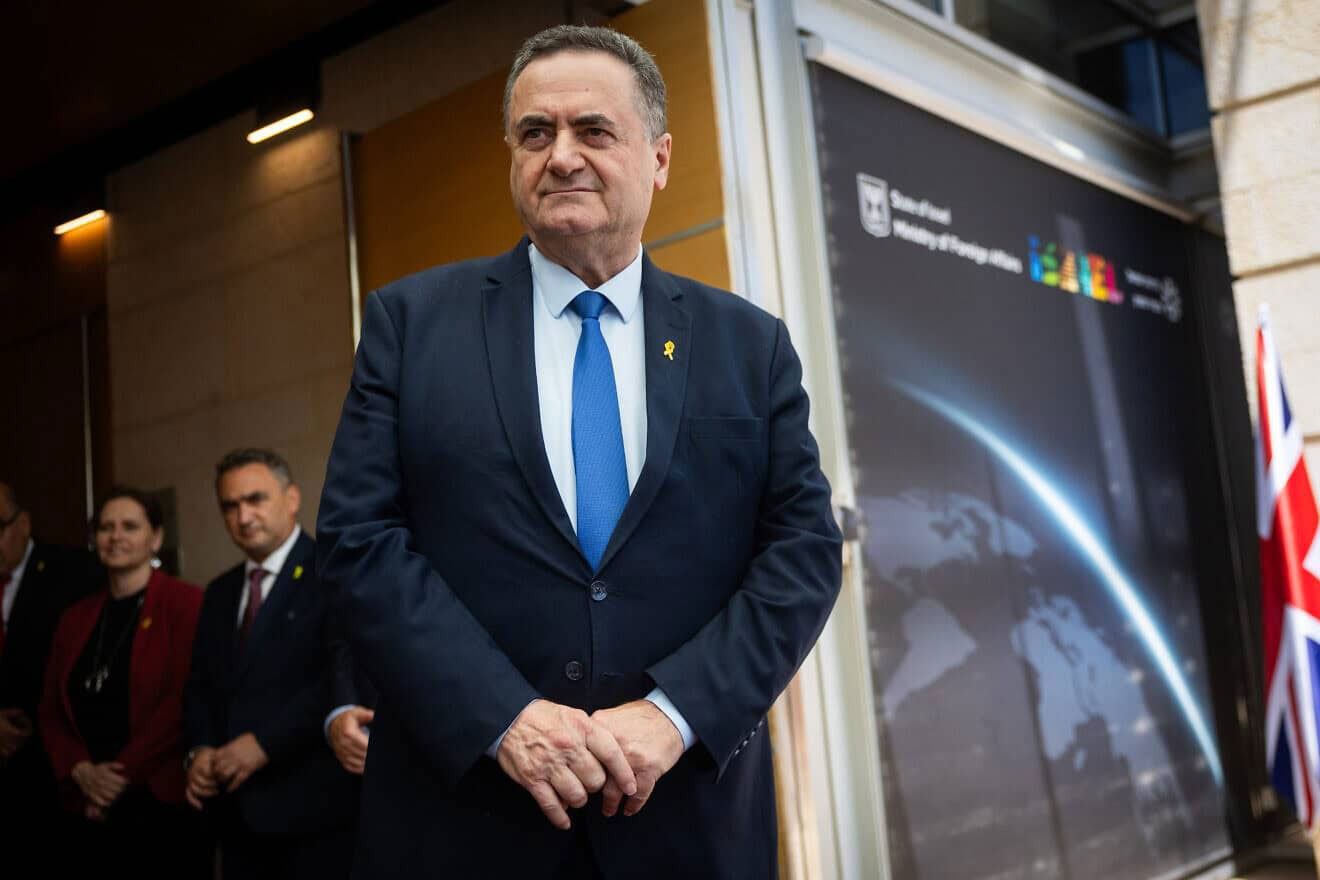
Then-Israeli Foreign Minister Israel Katz, now the defense minister, waits in Jerusalem for the arrival of British Foreign Minister David Lammy and French Foreign Minister Stéphane Séjourné on Aug. 16, 2024
(JNS) — Israeli Defense Minister Israel Katz announced his intention to close Israeli Army Radio (“Galei Tzahal,” or “Galatz”), on Wednesday. The station’s final broadcast date will be March 1, 2026.
Katz accused the Israel Defense Forces-run station of having become politicized. It has veered from its original purpose of serving as a voice for IDF soldiers and their families, and instead, has become “a platform for expressing opinions, many of which attack the IDF and the IDF soldiers themselves,” he said in a statement.
“The continued operation of the station involves the IDF, against its will, in the political discourse and severely damages its status as the people’s army,” he said.
Katz also noted that a military-operated civilian station is an anomaly, having “no parallel in any democratic country in the world.”
He clarified that Army Radio’s similarly named sister station, Galgalatz, which focuses on pop music, will not be affected by the decision and will continue operating. The defense minister made his decision after receiving the final report of a committee convened to study the matter just over two weeks ago, on Oct. 28.
Mordechai Kedar, a senior research associate at the Begin-Sadat Center for Strategic Studies, who appeared before the committee, told JNS: “Why should the state sponsor a media outlet that deals with politics? The army should be above politics.”
IDF Brig. Gen. (res.) Amir Avivi, founder and chairman of Israel’s Defense and Security Forum (IDSF), agreed, telling JNS that the defense minister had made “a reasonable decision. The army doesn’t need a station that deals with politics and even goes against the army and the soldiers in some of the programs.”
Kedar, who argued before the committee that Army Radio should be closed, also said surveys showed that most soldiers weren’t listening. They’re accessing their cell phone applications instead. “The only people who are listening to this, at least according to surveys, are civilians, normal people driving their cars,” he said.
Secondly, he said Army Radio competes unfairly with commercial stations, who fight for advertisements to survive. Kedar advised the study committee to recommend selling off the frequencies to entrepreneurs.
The committee’s secretary, Elad Malka, this week told Gadi Taub, host of the Shomer Saf podcast, that of the 5,000 petitions, or appeals, the committee received, 3,000 accused the station of holding a leftwing bias. None of the appeals claimed Galei Tzahal titled rightward, he said.
The committee also heard from reservists who claimed that the station damaged morale and worked to undermine them.
Malka offered one example. When soldiers were preparing in a staging area to enter the Gaza Strip as part of one of the “Gideon’s Chariots” operations, they heard pundits warn on Army Radio that doing so would mean certain death for the remaining hostages.
Kedar stressed that even if Army Radio was right-wing, it should be shut down. The military is “bending over backwards” to keep politics out of the army, only to have it brought in via its official radio station, he said, “This is insane. Regardless of the political side, I would object to it.”
The Union of Journalists in Israel said, “Israel Katz will not close down media outlets in the State of Israel. The organization will fight this bad decision until it is overturned. Galei Tzahal will not be closed down.”
Army Radio head Tal Lev-Ram said, “We see this as a real, regrettable and dramatic attack on the people’s army, on Israeli society and on freedom of the press in a democratic country.
“I intend to fight this serious decision in every way. I am proud of the work of the station, especially in the last two years during an ongoing war, and I’m convinced that the station will continue to exist for many more years,” he said. “It’s not possible for them to close the soldiers’ home.”