Courtesy of JNS. Photo credit: Dati Bendo via Wikimedia Commons
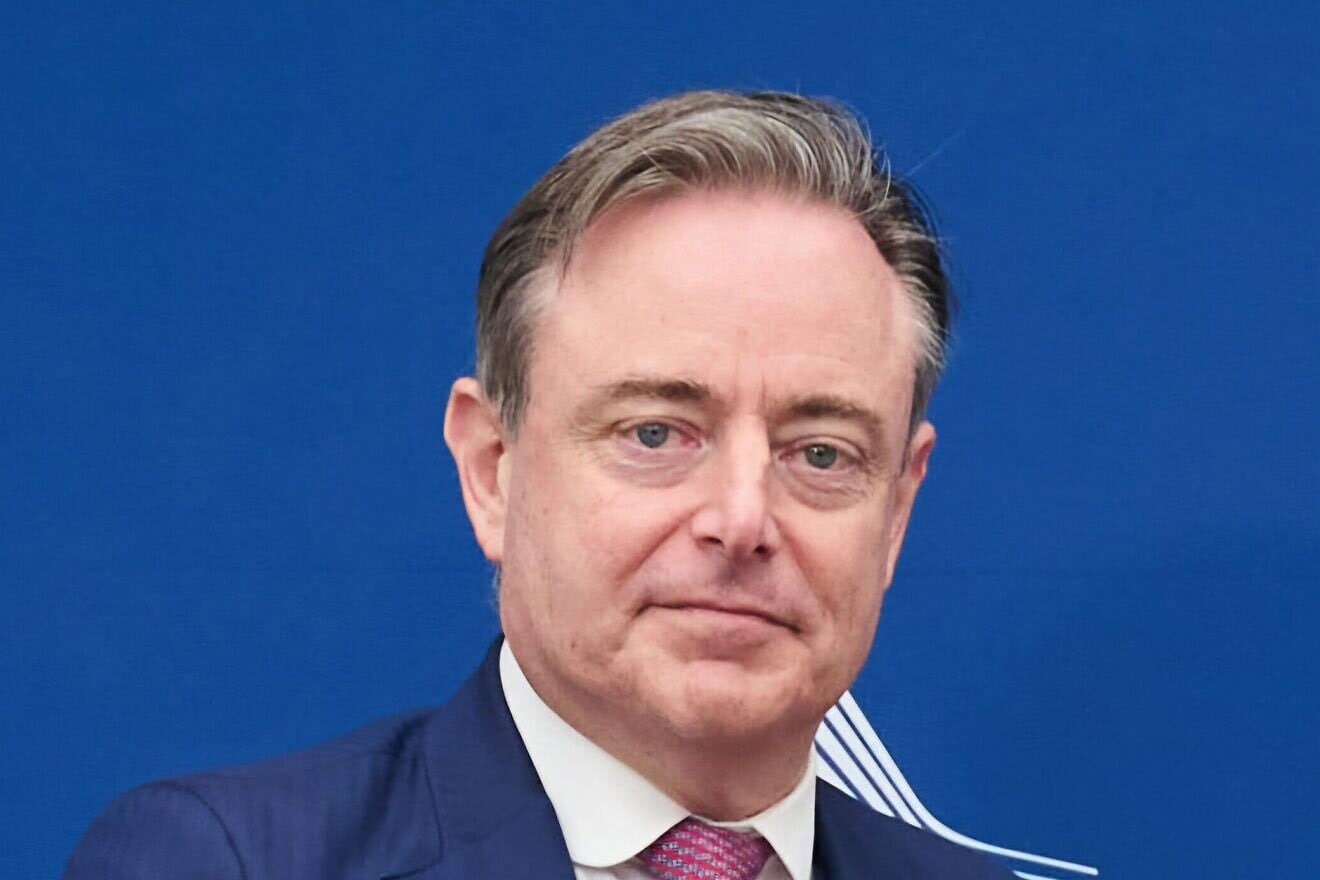
Belgian Prime Minister Bart De Wever visits the European Commission in Brussels on March 25, 2025
(JNS) — A Belgian-Jewish group on Dec. 24 condemned the government’s decision to intervene against Israel in the genocide case that South Africa initiated against the Jewish state in 2023.
“The decision to proceed with this intervention, rather than disengage, is deeply painful for the Jewish community,” Ralph Pais, vice president of the Jewish Information and Documentation Center (JID), told JNS.
Pais, whose group monitors antisemitism and anti-Israel hate activity in Belgium and the authorities’ response to those acts, noted that the initiative to file a declaration of intervention under Article 63 of the Statute of the International Court of Justice in the lawsuit was made by the previous government, under Prime Minister Alexander de Croo.
His government, which relied on a coalition featuring the deeply anti-Israel Green Party and the Socialist Party before it was dissolved in February, was one of the most hostile to Jerusalem in the history of the two countries’ relationship.
It was replaced by the center-right government of Bart De Wever, who has spoken critically on the prospect of recognizing a Palestinian state and who has said Belgian authorities would not arrest Israeli Prime Minister Benjamin Netanyahu if he visited Belgium despite a warrant for his arrest issued by the International Criminal Court.
Yet, “it must be stated clearly that the current government, led by Bart De Wever, had full authority to reverse this course [of getting involved in the lawsuit against Israel] — and chose not to do so,” Pais said.
The Jewish community’s “sense of pain is compounded by the fact that the Jewish community has overwhelmingly supported the parties forming this government,” Pais added.
Pais acknowledged that de Wever’s New Flemish Alliance party is in a coalition agreement with the center-left Les Engagés (“The Committed Ones”) party of Foreign Minister Maxime Prévot, who has led a hostile line on Israel.
“We fully recognize that governing within a coalition implies compromises, but the responsibility for this decision lies with the current government,” Pais said.
By intervening, “Belgium is not formally joining South Africa’s case against Israel,” he continued. “However, it would be misleading to present Belgium’s intervention as purely neutral. Belgium was under no obligation to intervene at all.”
Belgium went further, Pais said, and “put forward a legal interpretation of the Genocide Convention that effectively broadens and expands the definition at issue. This goes far beyond a neutral clarification and places Belgium on one side of a highly sensitive legal and political debate.”
Within Europe, the only other countries that have taken comparable steps are Ireland and Spain. Belgium’s choice “is therefore not perceived as neutral by the Jewish community. Its timing, its substance and its diplomatic context make it deeply troubling, especially given the expectations placed in this government,” Pais said.
He added that Israel has been fighting “for its existence against a terrorist organization that deliberately embeds itself within civilian infrastructure — schools, mosques, hospitals and residential areas.” Israel’s efforts to minimize civilian casualties within these circumstances “deserve acknowledgment rather than moral equivocation,” Paid said.
Israel has condemned and dismissed the legal action against it at the ICJ, as has the United States. A spokesperson for Israel’s foreign ministry did not respond to JNS’s request for a comment on Belgium’s decision in time for publication in this article.