It’s October and I’m hearing about the Nobel awards. The list goes on… It reminds me of December, when I am being told which books I should have read, which movies I should have seen, and which experiences made everyone else’s year worthwhile. There are best restaurants, best performances, best travel destinations, and, for those who still have time, the best of the best.
Although my interest is piqued, I have contemplated but never indulged in trying all the items suggested on some of my favorite lists, I suspect that even reading all these lists would leave me extraordinarily little time to do anything on them.
The parade of lists continues throughout the year. The Booker shortlist offers books to consider. Nobel announcements introduce people whose accomplishments deserve attention. Social media offers ten habits to adopt, seven mistakes to avoid, and five things we should have understood years ago. Meanwhile, on the kitchen counter sits a list with a more immediate purpose: eggs, bread, coffee.
These lists have different jobs. Some recognize achievement. Some rank competing choices. Others simply keep me from returning home without the one thing I went out to buy. Yet they share an appealing feature. They take something sprawling and give it edges.
Why does a column of words make life feel more manageable?
Perhaps because so much of life refuses to stay where we put it. A list, at least, sits still.
There is pleasure in seeing a beginning and an end and closure is an extremely helpful feeling to have in this world of forever changing priorities. There is relief in putting a reminder somewhere other than our already crowded minds. And there is that small, satisfying moment when we cross something off the list. Even an ordinary errand can look like an accomplishment with a check mark next to it.
A shopping list promises dinner. A reading list promises discovery. A bucket list offers the reassurance that we are paying attention to the life we want to live. Whether we take the trip or read the book is another matter. Sometimes it’s just like a map that offers a route, but not the inconvenience of packing a bag. For a moment, the list offers an address for a fantasized destination.
As quoted by Rebecca Rosen in her 2012 Atlantic article about Umberto Eco “We like lists because we don’t want to die.”
That is quite a burden to place on a note reminding us to buy paper towels. Still, his observation invites a useful question. Do we make lists only to remember, or also to feel that something remains within our grasp?
When looking closely at an ordinary shopping list we can see some important threads. It may be remembering a spouse’s favorite cereal, a grandchild’s snack, or the soup a neighbor enjoys. A few words can reveal affection as readily as appetite. Other lists reveal ambition, worry, or obligations we wish would disappear. We leave traces of ourselves in what we write down.
Psychological research offers a narrower, more practical explanation for why a plan may help. In their 2011 article, “Consider it done! Plan making can eliminate the cognitive effects of unfulfilled goals,” researchers E. J. Masicampo and Roy F. Baumeister examined what happens when unfinished goals remain on our minds. Across experiments, those unfinished goals caused intrusive thoughts during unrelated tasks. Think about the last time you were awakened in the middle of the night about a task you left undone…. The useful point is the difference between identifying a concern and acting about what to do.
“Deal with paperwork” may remain on a list for weeks, looking increasingly accusatory. “Tuesday after breakfast, call the office about the missing form” gives us a place to begin. The paperwork is still unfinished, but the next step is clearer.
I would not turn this finding into a promise that a notebook will solve every worry. Nor does research on planning establish that lists treat trauma. It suggests something more modest: a workable plan can sometimes free attention that an unfinished task keeps claiming.
For me that’s a start, how about you? We do not need to make every helpful idea into a cure.
There is, however, a point at which a list stops helping us remember and starts telling us whether we measure up.
We move from “What needs doing?” to “What should I have accomplished by now?” Someone else’s vacation becomes an item missing from our lives. A list of successful people becomes a reminder that our own names are absent (envy is not just another bullet point on the list, it can be an intrusive and unnecessary challenge). We must be mindful about our lists to be sure our leisure time does not acquire the atmosphere of homework.
Who decided which experiences belong on the ideal life list? Who had the money, health, freedom, or assistance to pursue them? Whose circumstances were left outside the frame?
A Nobel Prize recognizes an extraordinary accomplishment. It is not a complete inventory of human worth. The person who quietly keeps a family together may never appear on an awards list. Neither may the friend who keeps calling when conversation has become difficult.
In “Stop Keeping Score,” published in The Atlantic in January 2021, Arthur C. Brooks questions our tendency to treat achievement checklists as measures of happiness. His argument offers a useful companion to the planning research. Brooks argues that people often evaluate their lives with external measures such as money, status, achievements, promotions, possessions, or milestone checklists. While these metrics can be motivating, they rarely produce lasting happiness.
Finishing everything does not answer the ultimate question.
For one person, a productive day means completing a proposal. For another, it means getting dressed, asking for help, or leaving the house after a difficult stretch. The second person’s effort may be invisible to everyone who is counting accomplishments from a distance.
This becomes especially clear when an injury changes the life around which the old lists were built.
Consider Miriam, not the real name but a client of mine who suffered a traumatic experience.
Before her injury, wrenched from her car by the Jaws of Life Miriam worked, managed errands, and helped arrange family gatherings. Before being dependent on a wheelchair, she was the person who knew who needed a ride and what had to be picked up on the way. Her lists reflected a familiar role: she was someone others depended on.
Now appointments occupy much of her calendar. She needs transportation on some days. Activities take more energy than she expects. Invitations require decisions about stairs, seating, travel, and whether she will feel able to stay.
She is also shaken by what happened. The physical changes are only part of what she is trying to understand.
An appointment list can record where she needs to be on Thursday. It cannot describe how she feels when she must ask someone to take her there. A calendar can show a rehabilitation session without showing her grief about work she misses or the confidence she once took for granted.
People may tell her to concentrate on the positive. She may want to do that and still need room to mourn. Hope is not a plan and certainly doesn’t cancel loss.
If we were making a list to help us understand Miriam, what would belong on it?
Our list making practices differ, and I humbly suggest we leave space in the week for something whose value cannot be measured by how quickly it is completed.
A visit with a friend is not improved by treating it as another item to dispatch. Neither is rest made more restful by turning it into a competition.
A useful list is one we are willing to revise. We can carry forward an unfinished task without treating it as evidence of failure. We can remove a goal that no longer fits. We can add something we once considered too ordinary to deserve an entry: a conversation, a manageable outing, an afternoon with no obligation to prove anything.
By next December, there will be another set of best books and best movies. I hope to discover something worth reading and a film I would otherwise have missed. Lists can widen our world as well as organize it.
Not unlike you, I would want to remember that they are selections. Something has been included, and something else has been left out. The same is true of the lists by which we judge ourselves.
The grocery list can get us home with dinner. It cannot tell us whether we listened to the person who shared it.
I will keep making lists. I may even remember to take the grocery list into the store. But I want to leave room for the conversation, the change of plans, and the person whose story will never fit between checkmarks.
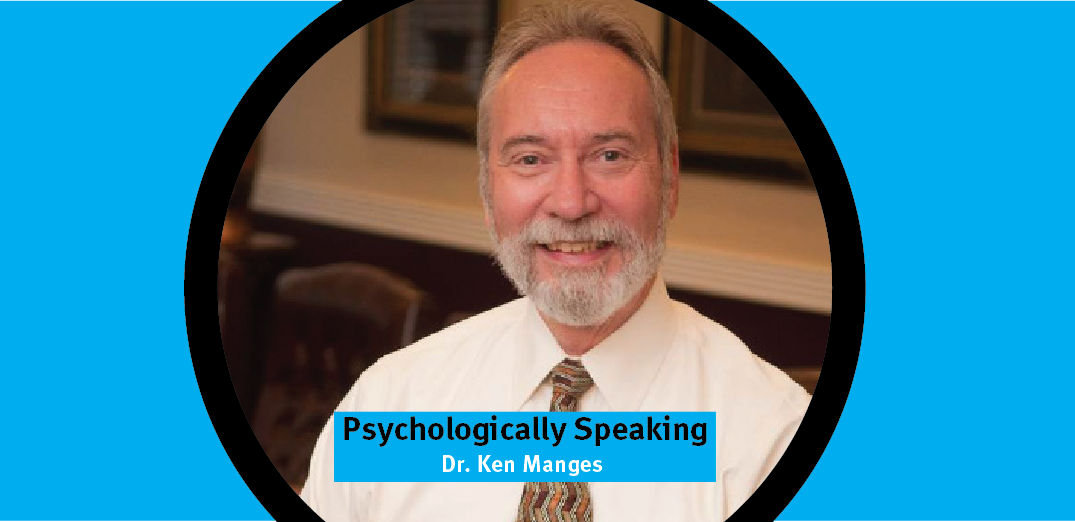
Thanks for reading the column. This piece was part of a longer article in my forthcoming book, Forensic Tales. Let me know if you are interested in a copy when it is published.
Please go to the AI website (psychology@americanisraelite.com) and post a comment.
Questions? Suggestions? Send me an email at psychology@americanisraelite.com. Be well. See you here next month.