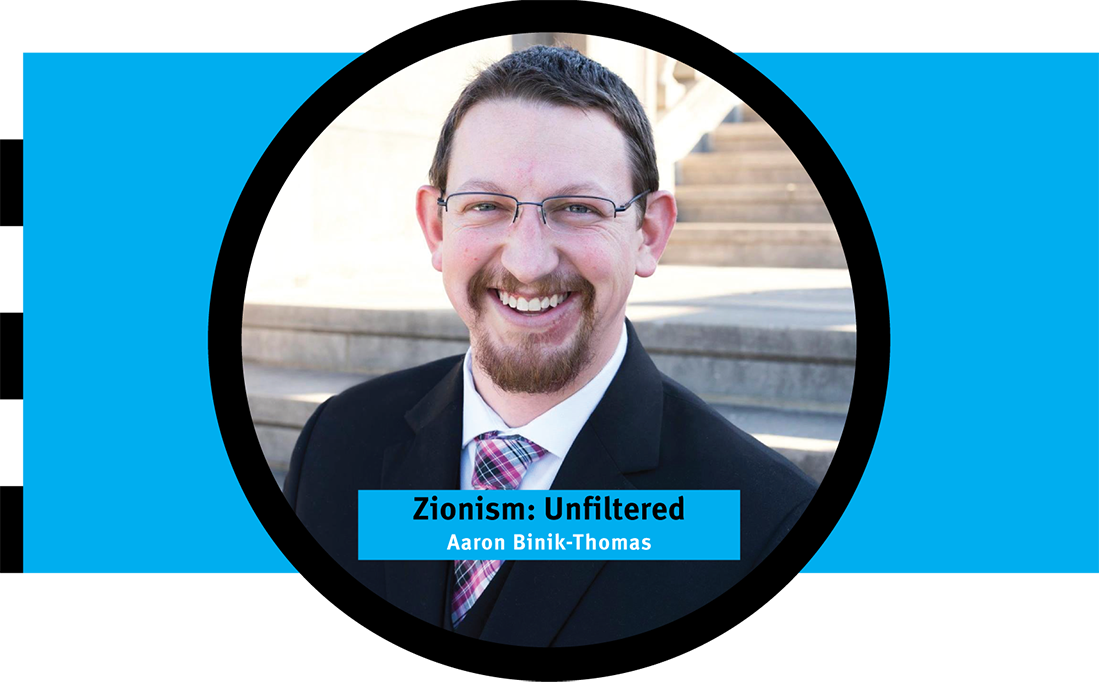
By Aaron Binik-Thomas
This past week I found myself in a lot of different rooms, all talking about Israel, the Jewish people and what comes next. Same topic, completely different tone depending on where you sat, and that contrast said a lot about where we are right now.
At the Z3 Conference, the focus was big picture. Identity, Zionism, the diaspora, Israel. People trying to step back and make sense of everything at once. I didn’t catch every session and missed the talk with Omer Shem Tov, which by all accounts was exactly what our Cincinnati community needed. Something honest that helped people process everything that has happened since October 7th.
Earlier in the day, though, we heard from two politicians who felt completely out of touch. It was a comfortable exchange between people who clearly agreed with each other, filled with polished lines and just enough substance to sound meaningful without actually saying anything that mattered. The room felt it.
The breakout sessions were where things shifted. Smaller groups, more direct conversation, people actually engaging instead of performing. That is where the value was.
I always try to leave with one idea that sticks. At Z3, it was the reminder that we spend so much time speaking in big terms, politics, strategy, war, peace, that we lose sight of something basic. There are people living inside all of this. Regular people who want to walk down the street, play basketball, take their kids on vacation and live a normal life. That perspective does not solve the conflict, but it forces you to think about it differently.
The next day I was at the Abraham Accords and Israel conference at the University of Cincinnati. The setting was more academic and more policy driven, but the same gap showed up between theory and reality. The first session I attended was from the Holy Land Confederation, and it felt like a repeat of what I had already seen. Two aging think tank voices presenting ideas that sound nice in a vacuum but fall apart the second you place them into the reality Israelis live in every day. The proposal leaned heavily against Israeli interests and tried to frame an EU-style Israel-Palestine confederation as a viable path forward. It is not grounded in reality, and everyone in the room knew it.
Where the conference did come alive was in the smaller discussions. The session on peace through sports stood out because it was rooted in something real. When people meet on a field or a court, they are not representing policy positions or political agendas. They are just people. They compete, they shake hands, they talk afterward and those moments create something that no conference panel ever will. It is not a grand solution, but it is real interaction, and that matters more than ideas that never leave the page.
By the time the week came to a close, we gathered at the JCC for Yom HaZikaron. The tone shifts immediately. Everything else fades out and you are left with memory, loss and the cost of everything we talk about so casually in conference rooms.
One speaker spoke about his grandfather, a Holocaust survivor, and the promise he made to him. His grandfather lived and died as a survivor, but we are not meant to stay in that place. We are done surviving, and now is the time to thrive. The way it was said mattered. It was direct, it was unapologetic and it carried a weight that none of the earlier conversations came close to.
On the way home, I was fired up and proud of who I am. I was telling my kids about Entebbe and why I chose to join the IDF. If Israel was going to stand up and protect Jews around the world, then I was going to go home and do my part. One of my kids responded, “If I was hijacked, I’d just say I wasn’t Jewish and they’d let me go,” and that hit harder than anything I heard all week.
Kids are already thinking this way. They are already trying to figure out how to shrink themselves if things get dangerous. That is the reality we are raising them in.
We are living in a time where antisemitism is not hiding. It is open, it is aggressive and it is growing. There are moments where it feels uncomfortably close to what our grandparents experienced before the Shoah. Thank Hashem we have Israel, because history has already shown what happens when Jews rely on blending in and hoping it passes.
I was reminded of that again when I heard about a Yom HaShoah program where a politician advised people to keep it quiet, not wear their Magen David and stay under the radar. That mindset is not new, and it has never protected us for long.
What stayed with me from this entire week is that the loudest voices are not always the most meaningful ones. The people who actually move things forward are often the ones having real conversations, building real connections, and refusing to disappear. Regular people, not think tanks, not panels, not polished speeches.
The second thing that became very clear is that it is time to stop shrinking. The moment that felt most alive all week was standing at Yom HaZikaron, hearing a call to stand up as a people, stop apologizing and move forward with strength and clarity. There is no future in trying to make ourselves smaller so others are more comfortable.
We have a State, we have a voice and we have a responsibility to use both without hesitation.
As Golda Meir said, it is better to be alive and hated by the whole world than to be dead and pitied.