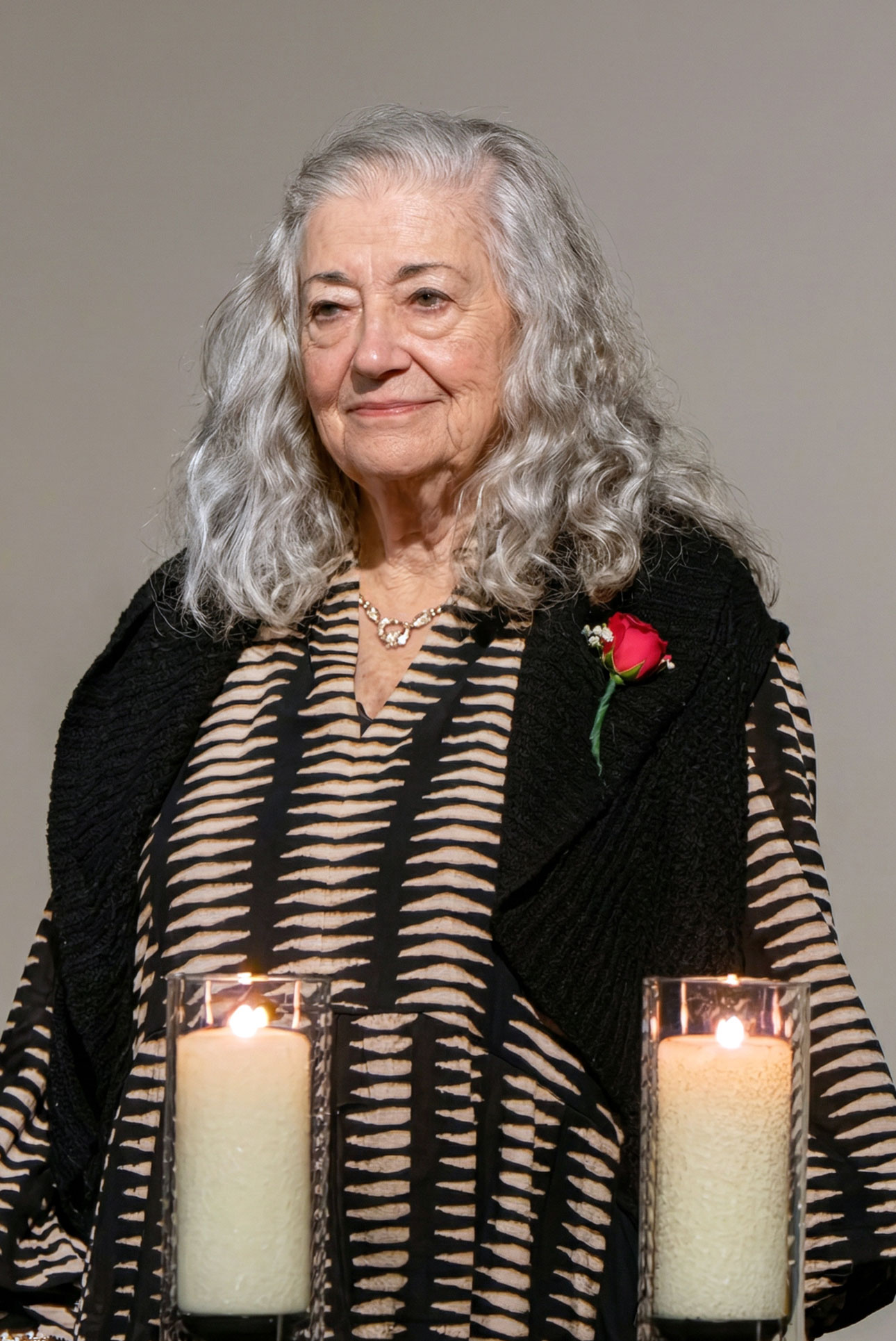
Photo credit: Natalie Emerson
Holocaust survivor Zahava Rendler lights the fifth candle in remembrance
By Natalie Emerson
Contributing writer
In a city where history is not merely preserved but actively told, the Yom HaShoah Community Commemoration on Sunday, April 12, at the Nancy & David Wolf Holocaust & Humanity Center offered a solemn and necessary charge: remembrance must be honest enough to include not only the crimes of perpetrators, but the silence of those who stood by.
Marking Yom HaShoah, the evening honored the six million Jews murdered in the Holocaust while preserving the voices of those who endured. Through testimony, music and ritual, the program reflected the day’s dual meaning — catastrophe and courage — while anchoring memory in the present generation.
The commemoration opened with an introduction by second-generation descendant Steve Coppel, who framed the significance of the Yom HaShoah siren and the enduring message of “Zog Nit Kein’mol,” the partisan anthem performed by students of Rockwern Academy under the direction of Rachel Westheimer, with pianist Claire Lee. The song, rooted in resistance, set a tone that would carry throughout the evening: memory is not passive — it is defiant.
Welcome remarks from Jackie Congedo, CEO of the Center, emphasized the institution’s mission to connect Holocaust remembrance with contemporary responsibility. That theme was reinforced in the invocation delivered by Rabbi Sammy Kanter of the Mayerson Jewish Community Center, who grounded the evening in both reverence and moral awareness.

Photo credit: Natalie Emerson
Jackie Congedo, chief executive officer of the Nancy & David Wolf Holocaust & Humanity Center, speaks with guest panelists following the Yom HaShoah ceremony
Music continued to play a central role. The Mason High School Chamber Orchestra, under the direction of Stephanie Jones, performed the theme from “Schindler’s List,” offering a restrained and deeply affecting interlude that bridged historical narrative with emotional resonance. Later, pianist Claire Lee returned with “Baym Geto Toyerl (At the Ghetto’s Gate),” further underscoring the cultural and spiritual memory carried through song.
At the heart of the evening was the candlelighting ceremony, where memory was visibly passed from one generation to the next. Readers and candlelighters represented second-, third- and fourth-generation descendants alongside Holocaust survivors themselves. Among them were survivor participants, including Pasha Sukhareva, Raisa Pustinsky, Zahava Rendler and Sofia Kobylyansky, whose presence transformed remembrance into living testimony. Younger voices — such as fourth-generation reader Jacob Brafman and third-generation participants including Emily Werbel and the Herman family — demonstrated that the responsibility to remember is not diminishing, but being carried forward.
This generational continuity was one of the evening’s most powerful elements. It was not simply stated; it was seen. Survivors lit candles alongside descendants who will carry their stories into the future, forming a visual and communal bridge between past and present.
The program did not shy away from difficult truths. In addition to recounting the atrocities committed by Nazi Germany, it addressed the broader moral failures that allowed those crimes to unfold. The silence of ordinary Germans — neighbors who watched persecution escalate without resistance — was acknowledged alongside the inaction of many Americans during the same period. As awareness of Jewish suffering grew in the United States, public pressure for intervention remained limited.

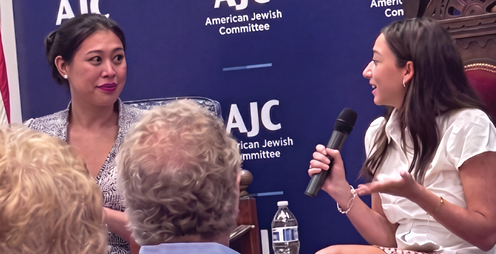
Photo credit: Natalie Emerson
Elizabeth Pierce addresses the audience during a question-and-answer session following the Yom HaShoah community commemoration; participants discussed ways people of diverse faiths could foster understanding and promote harmony
That failure was made concrete in references to events such as the MS St. Louis Incident, when more than 900 Jewish refugees were denied entry and forced back toward Europe. While such decisions were made at the governmental level, the absence of widespread public outcry remains a sobering reminder that silence, even when rooted in caution or uncertainty, carries consequences.
The evening’s pledge, led by Barbara Miller, Commemoration Committee Chair, brought these themes into the present. “We vow to tell your story,” attendees affirmed, committing not only to remembrance but to action — standing against prejudice and injustice in all its forms.
Closing prayers, including “El Malei Rachamim” and the Mourner’s Kaddish, were led by Dr. Albert Weisbrot, followed by a benediction from Rabbi Ezra Goldschmiedt of Congregation Sha’arei Torah. The program concluded with a moving rendition of “Hatikvah” by visiting performers Yarden and Uri of Chaverim M’Israel, reinforcing a sense of continuity and hope.
A keynote address by Ambassador Stuart Eizenstat, titled “The Holocaust: Past, Present, and Future Challenges,” extended the evening’s reflection beyond remembrance into contemporary relevance, urging vigilance in the face of rising antisemitism and global instability.

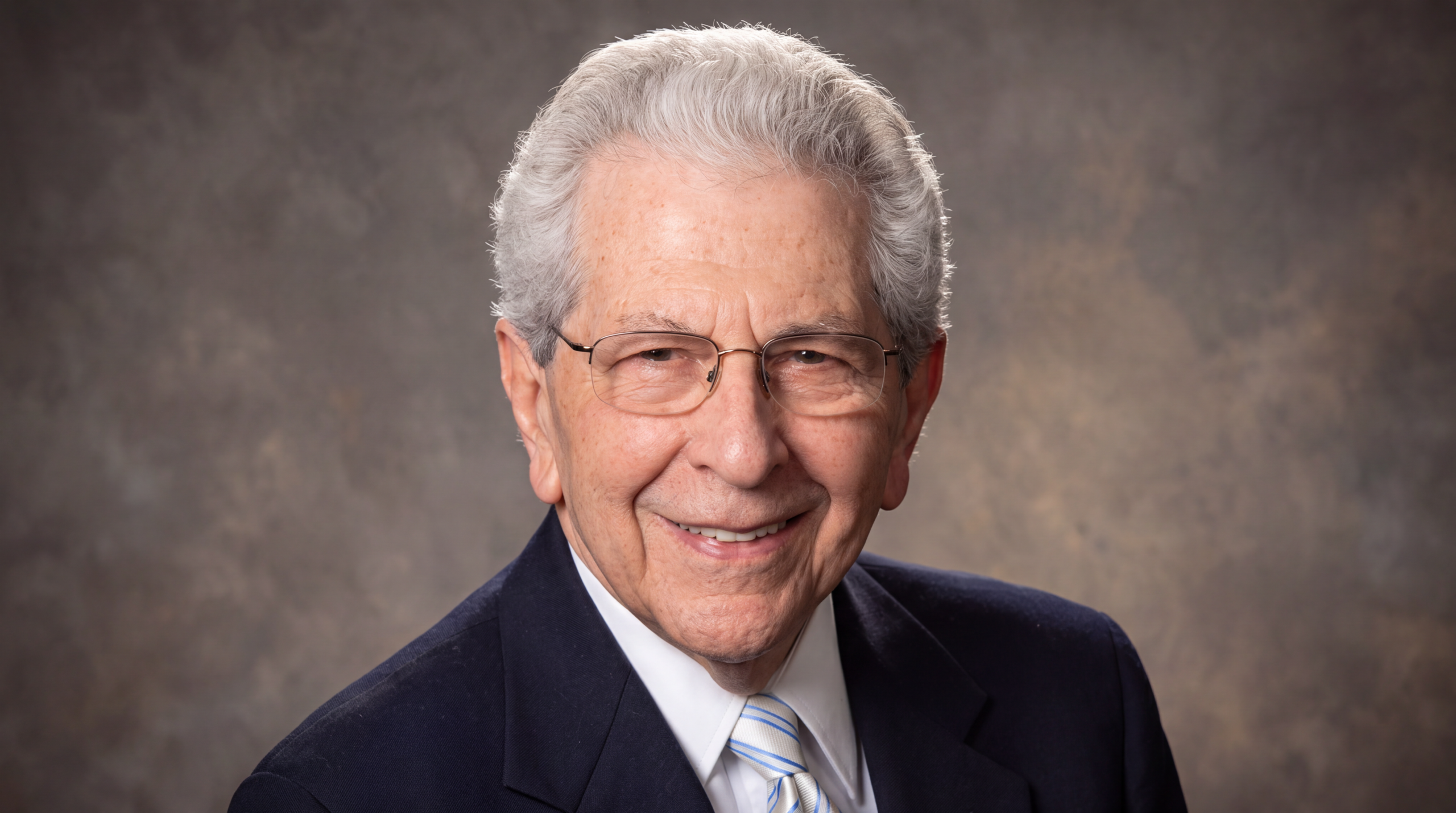
Photo credit: Natalie Emerson
Ambassador Stuart Eizenstat delivers a keynote address at the Nancy & David Wolf Holocaust & Humanity Center, urging vigilance against rising antisemitism
Closing remarks from Board Chair Nancy Frank returned the focus to community — those gathered, those remembered and those responsible for carrying the memory forward.
The commemoration, supported by a dedicated committee of community members and descendants, did not present memory as a finished task. Instead, it made clear that remembrance is an ongoing obligation — one that requires both honesty and courage.
At the Nancy & David Wolf Holocaust & Humanity Center, that obligation was articulated with clarity: to remember fully, to speak when silence is easier and to ensure that the lessons of history are neither softened nor forgotten.