
There’s a particular kind of quiet that settles in just before a launch.
Not silence but a low, expectant hum. The kind very few of us will ever feel in our lifetimes. The kind of sensation we as observers have only been able to imagine, that something magical is about to happen.
On the morning of Artemis II, when the newest generation of astronauts was preparing to arc beyond the pull of Earth, they weren’t just leaving the ground behind. They were stepping into a place where time itself changes its grip, where seconds stretch and compress. Where gravity…faithful, invisible gravity — applies an unbelievable unwillingness to let go and provides us with an incredible and demanding reminder that it takes thousands of pounds of thrust to blast off to the unknown.
It’s a strange thing to consider while we gulp our coffee. Like many other truths about time, unless it’s a countdown for a birthday, anniversary or the days to sit Shiva for a loved one, the passing of time doesn’t come with countdowns, but with a glance in the mirror, an ache where there wasn’t one before or a selfie taken a few years ago.
Birthdays come faster each year because as we age we experience fewer and fewer novel experiences. When there is novelty it causes us to stop and compare. When something is the familiar, we spend less time contemplating. The result… time passes more quickly as we age.
However, long before rockets, relativity and psychology, we were attempting to bend time.
We’ve been bending time with our language, our expectations and our culture before historical records were kept. We deliberately try to stretch time for the moments we’re enjoying, compress time for the noxious events in our lives and assign a value for those times we are sharing with the ones we love.
Physics bends time with gravity as Einstein discovered and what nature already knew, that gravity can change the flow of time.
On a less cosmic level, our culture attempts to bend time by the changes we make to our bodies.
Clock Time and Lived Time
Einstein caused us to rethink time — not as a rigid, ticking metronome, but as something more fluid, more responsive. He found that time slows in the presence of gravity. It speeds up in motion. It is, to use a pun, relative.
But Einstein’s equations, elegant as they are, only describe one kind of time.
There is another kind — the kind we live inside ourselves. The kind we feel viscerally. There is the feeling of time. This is analogue time. Whereas the passing of time on a clock is digital time.
Analogue time is what happens when we are in a state of flow, engaged, challenged and not conscious of the passing of the minutes or hours. However, we are well aware of the nano seconds when we are in pain, as time seems to stretch during our agony. But it compresses during moments of joy and lingers when mournful and in grief.
Digital is the type of time when we are rushed and have a schedule to keep. Digital time is what your phone tells you. Precise. Unforgiving. Democratic in its distribution, but indifferent in its meaning.
We pretend these two types of times are synchronized like Greenwich Mean Time (GMT), which the world has used since 1884 in order to have one time to navigate the seas.
Analogue and digital time are not alike.
And more importantly, they are not distributed equally.
Because while digital time treats everyone the same, analogue time — lived time — is shaped by our personal experience and the culture within which we are living. To further complicate matters culture keeps different clocks for men and women.
Men Age. Women Expire.
There’s an old anthropological notion — half observation, half indictment — that a man passes through seven ages, while a woman is granted only one.
That one age for women appears to be…Youth.
After that, she is… something else.
Listen to the language we use. It tells the story better than any theory.
An “old man” carries a certain dignity. An “old boy” can be charming. An “old chap” suggests warmth, familiarity, even affection.
But an “old woman”? An “old maid”? An “old lady”?
The tone shifts to something pejorative. The edges are sharp. An appreciation of wisdom and respect has been lost, and as a culture we have unfortunately kept notice.
We have, in effect, created two separate time zones.
Men age forward — gaining character, authority, gravitas.
Women age outward — losing value, relevance, visibility.
As an aside, I do not agree with these value judgements and use them here for the purpose of sharing how cultures have not respected the value of aging and the respect we all deserve regardless of our gender.
Mark Twain once remarked, with his usual mix of wit and sting, that “life would be so much happier if we could only be born at the age of eighty and gradually approach eighteen.” The film “The Curious Case of Benjamin Bottom” starring Brad Pitt is a story about Mark Twain’s quote.
Lucille Ball offered her own solution to the aging problem: “The secret to staying young is to live honestly, eat slowly, and lie about your age.”
It’s funny because it’s true.
The Stories We Tell About Time
If you want to understand how a culture thinks about time, don’t start with its science.
Start with its stories.
Another film about time (no this is not a best films on television column) was “The Picture of Dorian Gray,” where youth is preserved not by discipline or acceptance, but by displacement. The body remains untouched while the portrait absorbs the damage of time. It’s a fantasy, of course — but a revealing one.
We don’t want to stop time, but in capturing the business model du jour, we want to outsource our aging.
Freezing the Clock
Which brings us, inevitably, to the face.
Not the face as biology, but the face as canvas. As project. As battleground.
Crow’s feet. Laugh lines. Nasolabial folds. Marionette lines. Each one a small, visible record of time passing. Each one a mark of having lived.
And increasingly for some, something to be erased.
The pursuit of cosmetic intervention — once the domain of a narrower demographic — has widened. Younger cohorts are entering earlier. Correction has replaced aging. The goal is no longer to reverse time, but to interrupt it and erase the evidence.
We inject. We fill. We smooth. We freeze.
We turn analogue aging into digital stasis.
And in doing so, we risk something that is harder to name but easier to feel.
Helen Bransford describes the aftermath of her own procedures with unsettling clarity: her face became “an empty face, tame as glucose. Anyone’s face.”
Anyone’s face.
Although we are a culture that prizes individuality, the corrections to time’s tracks have removed the character and replaced it with a sameness in pursuit of youth.
There is a psychological cost here, and it is not trivial. The face is not just a surface — it is a signaling system. Micro-expressions convey emotion, intention, connection. When we dampen that system, we alter not just how we are seen, but how we are understood.
In trying to stop time, we may be stopping the very thing that makes time meaningful.
Other Cultures, Other Clocks
This pursuit is not uniquely a Western phenomenon.
Across history and geography, cultures have shaped the body in response to ideals that, in one way or another, reflect time.
In the Caucasus region, prehistoric Georgians thickened their eyebrows with mouse fur, coated their hair in lard and applied skin whiteners laced with lead and mercury. These substances ironically shortened the lives that were meant to offer the appearance of youth. Instead the applications of lead and mercury offered a shortened life span.
Among the Kayan people, brass rings elongate the neck over time, creating a visual illusion of extension, of length, of something beyond the ordinary.
In historical China, the practice of Foot binding compressed the foot into a permanently altered form — beauty achieved through restriction.
Among the Mursi tribe, lip plates stretch the lower lip, marking identity, status and cultural belonging.
Different methods. Different meanings. Different cultures. But all have a shared principle.
The body is the vehicle where culture artistically manipulates the concept that time can be negotiated.
In the West, we have chosen a particular strategy.
We don’t stretch or bind.
We preserve. We suspend. We simulate.
We put the plastic on the inside.
Time, Work, and the Quiet Politics of Aging
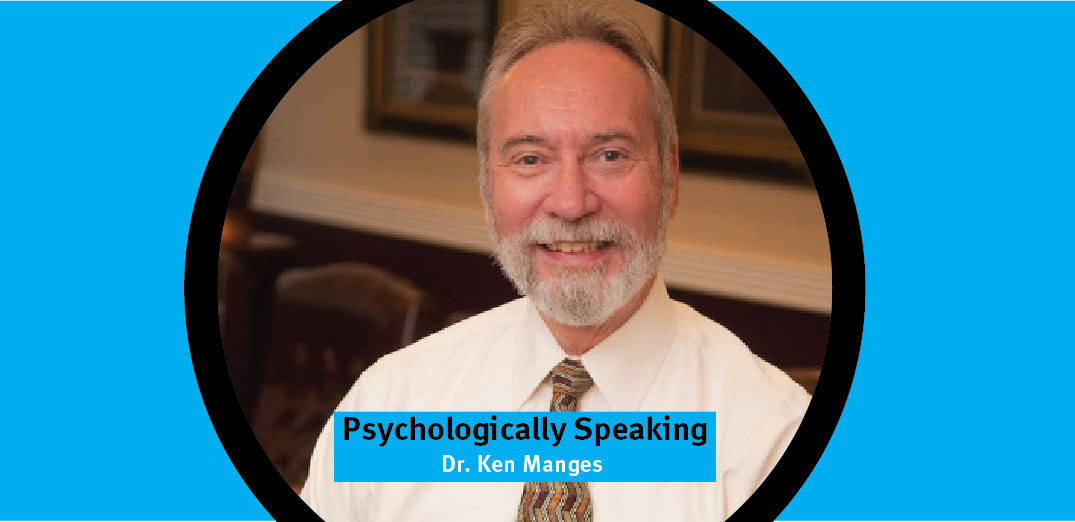
In my own work — as a forensic psychologist and vocational expert — time shows up in less poetic but no less consequential ways.
I testify about life expectancy if the person had not died or become injured. I speak about work-life expectancy with and without injury. Residual functional capacity, what the person is capable of performing had they not been injured. The science offers a model based on probabilities, on data sets, on actuarial tables that attempt to quantify what remains.
And then there is the number that tends to shift the tone in the room.
Fifty-five.
Federal Social Security considers a person who is 55 years old as “advanced senior age.” A point at which adaptability is presumed to decline. At which the labor market, subtly but decisively, begins to narrow.
Now, to be clear — these are probabilistic observations, not deterministic truths.
But they carry weight.
They influence decisions. They shape expectations. They become, in effect, policy.
And outside the courtroom, we see a parallel conversation unfolding in politics.
We talk about “term limits,” but often what we mean — what we hesitate to say — is “age limits.” A discomfort not with tenure, but with time. A concern that years lived translate automatically into diminished capacity.
Sometimes they do.
Sometimes they don’t.
But the conversation itself reveals something deeper: we are uneasy with aging in positions of power, even as we rely on the experience it provides.
Time, once again, is being negotiated — not as a neutral measure, but as a proxy for value.
Who Owns the Clock at Home?
If time is power, then the question becomes: who controls it?
Ann Shelton explored this in a way that is both simple and revealing. Over time, men have increased their participation in household labor — dishwashing, laundry, general upkeep — by a factor that would have been unthinkable a generation ago.
Progress, certainly.
But not parity.
Because the type of work matters.
Men, more often, engage in tasks with temporal flexibility. The lawn can be mowed today, tomorrow or next weekend. The car can be washed when time permits.
Women, more often, remain responsible for tasks with temporal urgency. Dinner must be made when children are hungry. Schedules must be kept. Needs must be met on time, not eventually.
Try telling a hungry child that dinner will be postponed by an hour much less a week!
Let me know how that goes.
The distinction is subtle, but significant.
A Personal Note on Time
I was sitting in my office not long ago, reviewing a file that had more years in it than most people have patience for. Medical records. Employment histories. Dates stacked on dates, each one a small marker of something that had happened, something that had changed.
Across from me sat a man — mid-sixties, who had spent the better part of his life working with his hands. Good work. Honest work. The kind that leaves a mark, not just on the resume, but on the body.
At one point, he looked up and said, casually, “I don’t feel any different.”
He wasn’t talking about pain. He wasn’t talking about limitation.
He was talking about time.
“I don’t feel sixty-five,” he said. “I feel… the same. Just with more behind me.”
It’s a simple observation.
But it contains a truth we don’t often acknowledge.
Digital time says he is sixty-five.
Analogue time says he is the sum of his experience.
And somewhere between those two clocks, decisions are being made — about his capacity, his value, his future.
The Western Argument Against Time
We like to think of ourselves as forward-looking.
Progress-oriented. Future-focused.
But when it comes to time itself, Western culture has taken on a more adversarial stance.
We fight it. We measure it. We attempt to outmaneuver it.
We treat aging as a problem to be solved rather than a process to be understood.
And in doing so, we create a peculiar contradiction.
We buy products. We adopt procedures. We adjust language. We construct policies — all in an effort to manage something that, at its core, cannot be changed only survived.
It’s not entirely irrational.
After all, if gravity can warp time — as Einstein showed us — then perhaps, on some level, we believe culture can too.
And in a sense, it does.
But just not in the way we hope.
Returning to the Launch
When the astronauts of Artemis II left Earth’s orbit, they experienced something most of us never will. Time, for them, passed differently. Not metaphorically, but physically. Measurably.
Their clocks did not match ours. They returned younger than if they had remained on earth!
When they returned, they stepped back into a world where time is measured not just in seconds, but in expectations.
Where age carries meaning beyond number.
Where faces are read as timelines.
Where value is assigned not just to what has been done, but to how much time appears to remain.
We cannot change the physics of time.
But we might reconsider the culture of it.
Living in Time, Not Against It
There is a quiet wisdom in accepting what cannot be controlled.
Not resignation. Not passivity.
Acceptance.
Time is not something we defeat.
It is a vessel we inhabit.
We move through it, yes — but it also moves through us. It leaves marks, not just on our faces, but on our relationships, our work, our sense of self.
To deny those marks is to deny the evidence of having lived.
To erase them is to risk erasing the story they tell.
The goal is not to stay young.
The goal is to stay present.
To recognize that analogue time — the lived, felt experience of being here — is the time that ultimately matters.
Time flows as freely and unencumbered as the waves on an ocean unless channeled or interrupted by human need or cosmic influence.
We are consumed with surgically interrupting, physically blasting and culturally resisting the inevitable marching of time.
Digital clocks will keep ticking.
Cultural expectations will keep shifting.
But the deeper question remains unchanged.
Not how old we are.
But how we belong and accept the time we’ve been given.
This column was taken from a longer article to be published in my forthcoming book on Forensic Tales. I hope you enjoyed it. Please go to the AI website (americanisraelite.com) and post a comment.
Questions? Suggestions? Send me an email at manges@drmanges.com. Be well. See you here next month.