Courtesy of JTA. Photo credit: Max Fein
The Max Fein school is meant to be an oasis of sorts for Israeli students who have fallen through the cracks; after missiles struck the school during Israel’s war with Iran, students found a way to carry on
(JTA) — Students at the Max Fein Vocational High School in Tel Aviv are used to overcoming challenges.
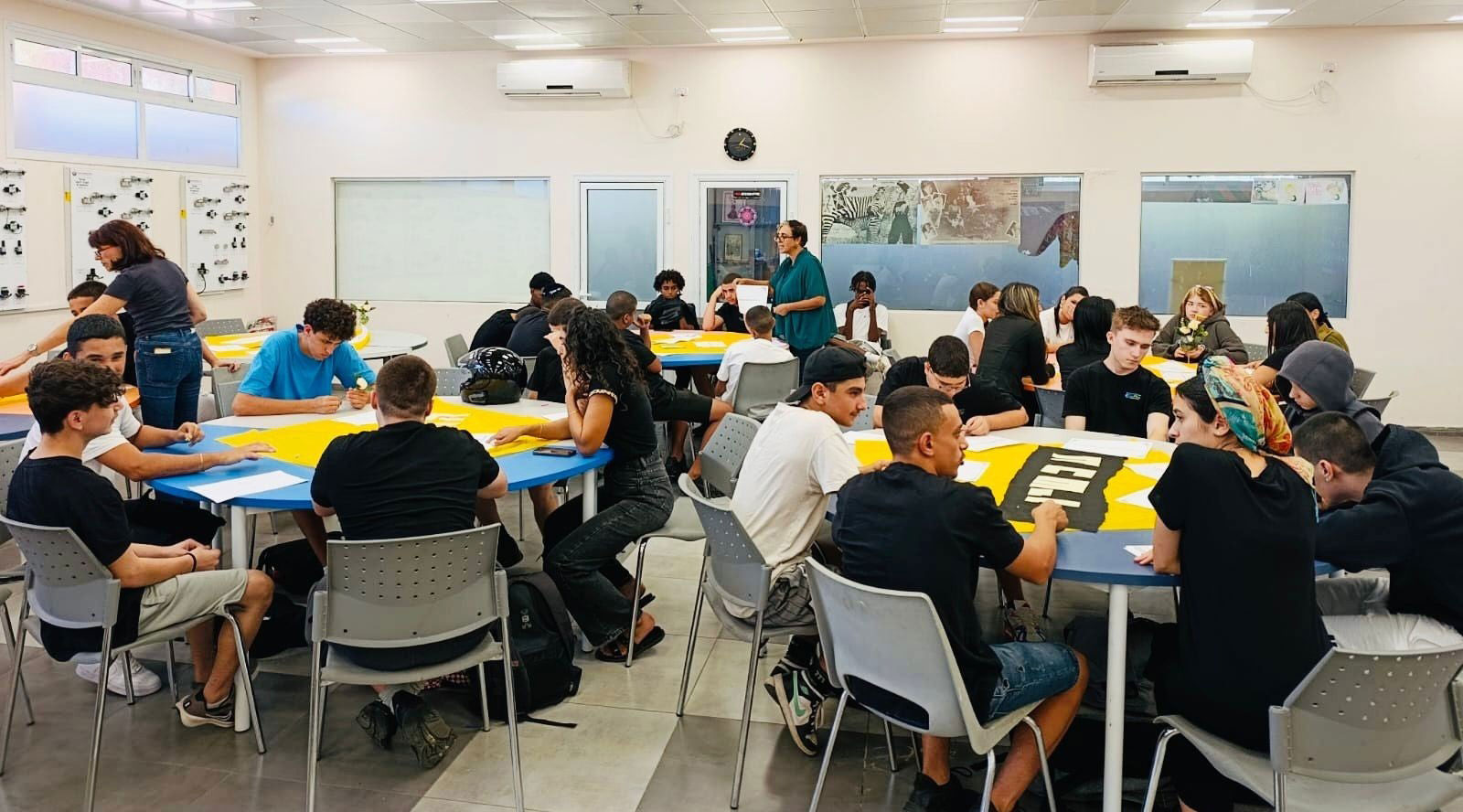
The school long has been known as a place where students who have fallen through the cracks in Israel’s state educational system — whether due to trauma, family problems, mental health struggles or socioeconomic hardship — get an opportunity to rewrite their life trajectories. Children come from diverse backgrounds, including immigrants, refugees, and students who dropped out or were expelled from their previous schools.
But when the school was damaged by Iranian missile strikes during the 12-day war between Israel and Iran, it brought a new kind of hardship.
“In the heart of Tel Aviv, where missiles have fallen and protests flood the streets, our students are fighting personal battles just as fierce,” Ofir Levy, the school principal, who spent 10 months in military combat reserve duty since Oct. 7, 2023, said at the time. “They have been amazing about it. Because this school is more than a classroom. It’s a home, a sanctuary and a second chance.”
Israel’s longest-ever war may be at its end, but two years of conflict have left their mark on Max Fein.
Like others in Israel, students had to deal with personal losses, including relatives killed in the war, and frequent air raid sirens. The school came under particularly heavy fire during the Iran-Israel war because it’s located right next to Israel’s military headquarters in Tel Aviv. And the prolonged absence of Levy, an IDF company commander, left the school without its leader during one of the most turbulent periods in its history.
Now the school is using these challenges as an opportunity for renewal, renovating rocket-damaged areas into new creative spaces, including building a podcast and music recording studio as well as a long-awaited gym.
In this sense, the Max Fein school is a mirror of Israeli society: It took a hit, but thanks to the strength of its community it’s bouncing back and rebuilding.
In November, the school inaugurated the MaxFun Center, a new space for conferences, arts and sports meant to foster creativity, culture and resilience. The center currently is hosting an exhibition of artworks by graduates that reflect the school’s role as a home and creative sanctuary for students from diverse and often challenging backgrounds.
During the war, students said that having their principal in uniform — facing the same dangers as their brothers, cousins, and neighbors — brought both anxiety and pride. When Levy returned between military deployments, he reminded students that resilience was not just a lesson in their textbooks but something lived together in classrooms, bomb shelters and the front lines.
Even during missile attacks, classes moved into bomb shelters and lessons continued, turning war-related disruptions into moments of strength. When the school was struck by Iranian missiles, the building was empty because all schools in Israel were closed at the time due to the war.
“When the missiles hit, it was terrifying to think what could have happened if students had been inside,” Levy said. “We walked through the rubble of a classroom that, in normal times, would have been full of teenagers. The fact that the building was empty saved lives, but it also reminded us just how fragile normalcy is. For our community, it was a wake-up call that education here is always under fire, literally, and yet that makes our mission all the more urgent.”
Max Fein aims to be an oasis of sorts for its 160 students, including both high school and a two-year post-high school track with courses in vocational subjects like electrical engineering, mechanics, sound production and fashion design. At Max Fein, students spend two days a week working and three in class.
The school is part of Amal, a national network of 50 schools focused on populations at the periphery of Israeli society: the disadvantaged, immigrants, Arabs, haredim and others.