Courtesy of The Jewish Federation of Cincinnati
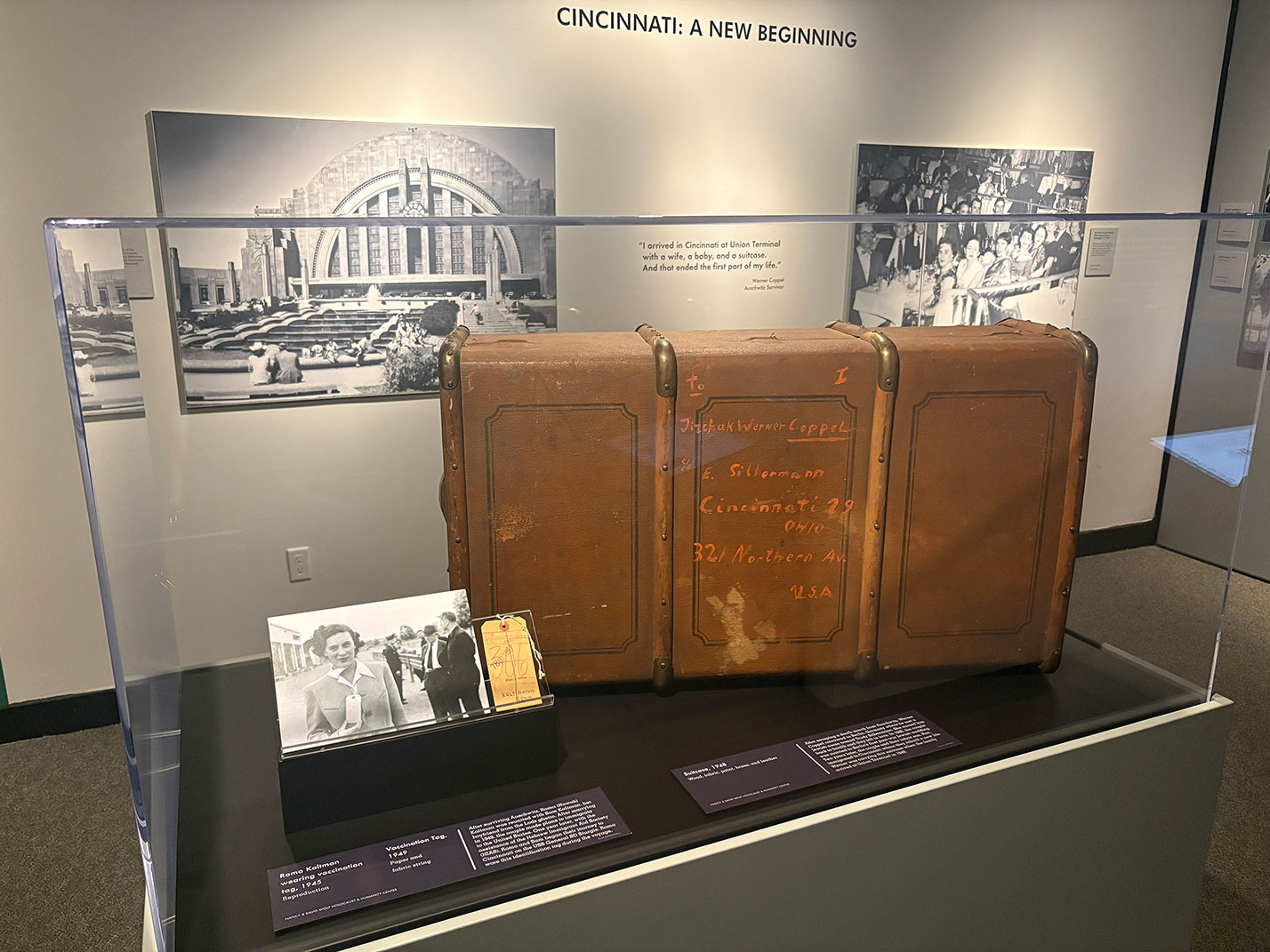
Werner Coppel’s suitcase is displayed just a few hundred feet from where he arrived at Union Terminal after surviving Auschwitz
Submitted by The Jewish Federation of Cincinnati
When Werner Coppel stepped off the train at Cincinnati’s Union Terminal in 1947, he carried a wife, a baby and a single suitcase. Inside it was everything he owned after surviving Auschwitz. With determination and that single suitcase, Coppel began a new life in Cincinnati.
That suitcase, its leather handle cracked, his name still visible in faded ink, now appears in “Auschwitz: Not Long Ago. Not Far Away,” a traveling exhibition that brings more than 500 original artifacts and 400 photographs from global collections to Cincinnati through April of next year. The exhibition came to Union Terminal through an extraordinary partnership led by the Cincinnati Museum Center and Nancy & David Wolf Holocaust & Humanity Center, working with the Jewish Federation of Cincinnati and the Jewish Foundation of Cincinnati.
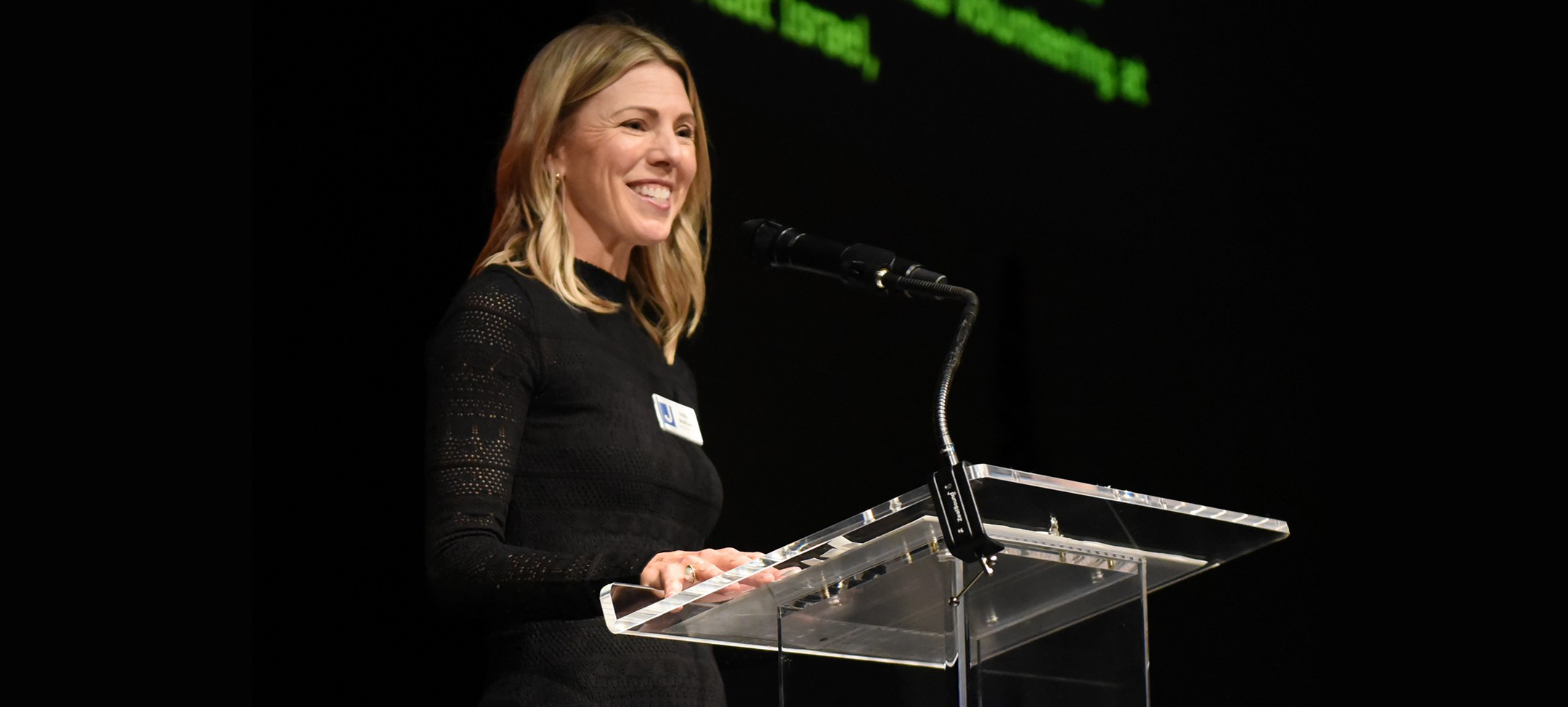
Federation CEO Danielle V. Minson sees the exhibition as both gratitude and obligation. “The Federation’s mission is to transform collective giving into collective impact,” she said. “By helping bring the Auschwitz exhibit to Cincinnati, we are teaching future generations to not only never forget, but that memory must lead to humanity.”
Coppel’s suitcase and the many artifacts within this exhibition remind us that the Holocaust is not only European history. It is Cincinnati’s history, too. How fitting that some of these stories have come full circle, returning to the very place where Coppel and hundreds of survivors took their first steps toward a new life.
“We are incredibly proud to have helped make this possible,” said David Harris, Chief Development Officer of the Federation. “Cincinnati beat out Chicago for the exhibit’s final North American stop in part because of our unique partnership between the Museum Center and the Holocaust & Humanity Center, and because survivors actually arrived here through Union Terminal.”
With help from the Foundation, Federation and its donors contributed roughly a million dollars to make the Auschwitz exhibit possible. “It was a large amount to raise,” Harris said. “But donors immediately understood why it mattered. They wanted the Jewish community to lead and to educate the entire region.”
That leadership drew on years of trust. The Federation guided fundraising to relocate the Holocaust & Humanity Center into Union Terminal in 2019 and collaborated closely with the Museum Center during the Jewish Cincinnati Bicentennial, a partnership that prepared Cincinnati for this once-in-a-generation opportunity.
Inside the exhibition, visitors learn how a Polish rail hub became a death camp at the center of one of history’s darkest chapters, and how many Jewish Cincinnati families are part of that history. Violinist Henry Meyer survived Auschwitz after a physician secretly swapped his registration card. He rebuilt a life here, co-founded the LaSalle Quartet and taught generations at the University of Cincinnati. Bella Ouziel, deported from Salonika, fasted on Yom Kippur in Auschwitz as spiritual resistance, then emigrated to Cincinnati in 1951, found work at Standard Textile and helped welcome other refugees.
For the Federation, bringing this exhibit was never only about remembrance. It was about responsibility. “Every gift to the Federation makes moments like this possible,” said Minson. “And these moments, these lessons, are needed more now than ever. The Museum Center and Holocaust & Humanity Center understand that this exhibit helps combat rising antisemitism and Holocaust denialism with these undeniably real stories. I am so proud of our community’s support for this beacon of education.”
For Harris, who has visited Auschwitz in Poland with March of the Living, the Cincinnati presentation offers a unique encounter for those who may never travel to the actual location. “Nothing can replace standing in Auschwitz,” he said. “But this exhibit…there’s nothing else that even comes close. It’s a more holistic view of the Holocaust, and how it highlights local survivors is incredible.”
When visitors step into the galleries, they will stand in the same terminal where Werner Coppel once clutched his wife, his infant son and his battered suitcase. Today, that suitcase sits just a few hundred feet from where so many vowed to rebuild, a silent witness to the donors, families and institutions ensuring these stories endure.