
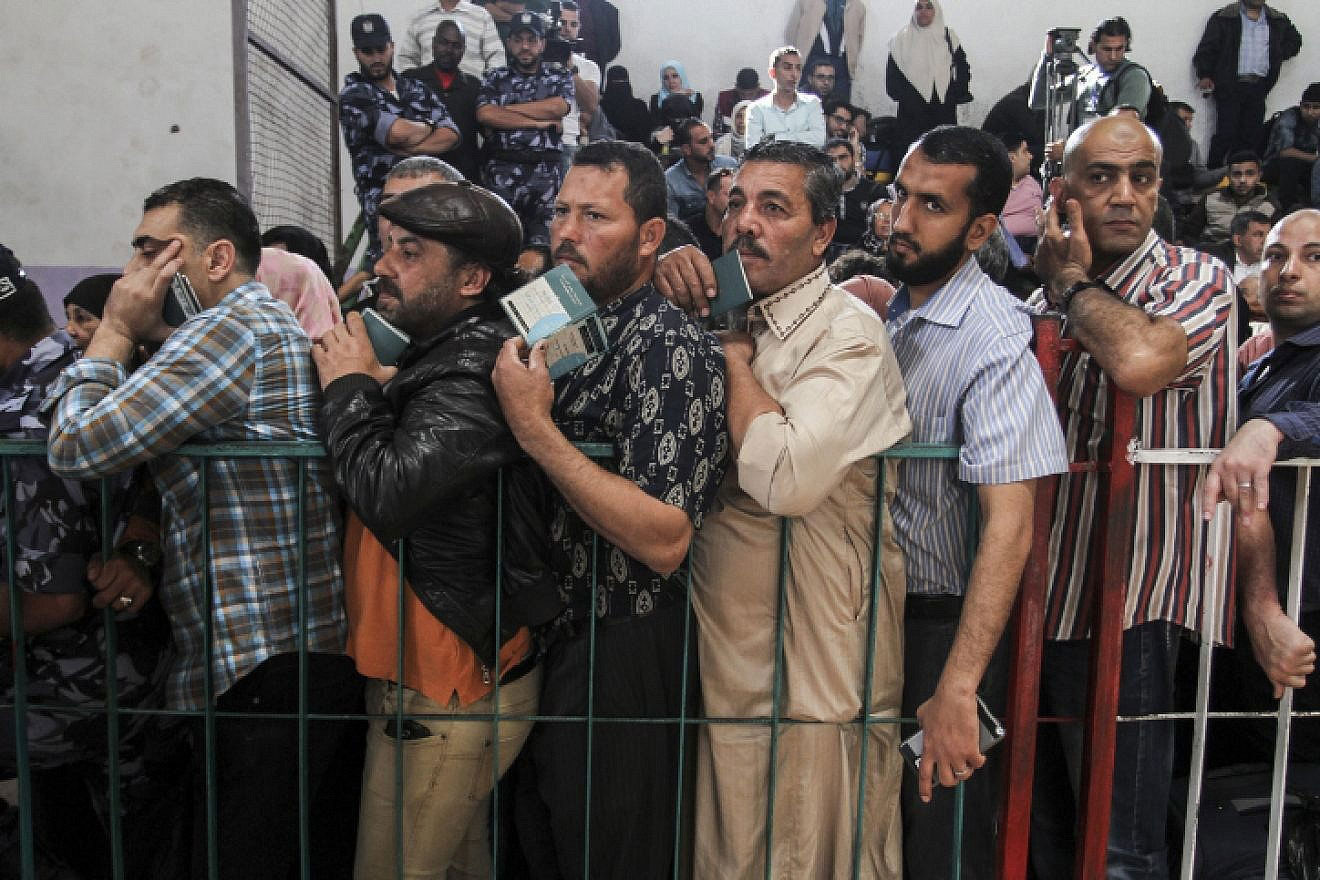
Courtesy of JNS. Photo credit: Abed Rahim Khatib/Flash90
Palestinians wait at the Rafah border crossing with Egypt in the southern Gaza Strip, after it was opened for two days by Egyptian authorities, on May 11, 2016
(JNS) — Forty thousand Gazans, or almost 2% of the Strip’s prewar population, have left the coastal enclave since start of the war sparked by Hamas’s Oct. 7, 2023, massacre, Kan News reported on Thursday.
Citing sources familiar with the matter, Israel’s public broadcaster reported that more than 1,000 Palestinians have exited the Strip since the ceasefire between Israel and Hamas went into effect on Oct. 10, 2025.
The U.S.-brokered agreement states that Gaza’s residents will be allowed to leave the Strip to Egypt through the southernmost Rafah Crossing in coordination with Cairo and subject to Jerusalem’s security approval.
Palestinians who want to leave Gaza but do not hold a foreign passport face a complex approval process that often depends on relations with Hamas’s “civilian” authorities, Kan reported, citing local sources.
Because medical exit permits are issued by hospitals under Hamas’s control, applicants must maintain good relations with the terrorists. Gazans known to oppose Hamas or who have taken part in protests against it are unlikely to obtain the necessary medical approvals.
Meanwhile, wealthier Gazans sometimes resort to paying bribes to doctors to secure falsified documents stating they require urgent treatment abroad, according to local sources cited by Kan News.
Another option is to pay thousands of dollars to humanitarian groups that coordinate with nations that are willing to issue temporary visas.
On April 25, Israel’s Channel 12 News broadcaster reported that some 36,000 Gazans had left the enclave since the start of the war on Oct. 7, 2023.
Most of the departing Gazans went to Egypt, Jordan, the United Arab Emirates, countries in Western Europe and Romania, the report said.
A survey published in Britain’s Telegraph on March 21 revealed that 52% of Arabs from Gaza, or more than 1.1 million individuals, would leave the enclave either temporarily or permanently if given the opportunity.
Jerusalem’s Security Cabinet on March 22 approved Defense Minister Israel Katz’s proposal to establish a directorate within his ministry to facilitate voluntary emigration from the Strip.
Katz stressed that the initiative aligned with the vision of U.S. President Donald Trump, who had previously touted a plan to turn Gaza into a real estate development and relocate its some 2.2 million residents.