Courtesy of JTA. Photo credit: Deborah Danan
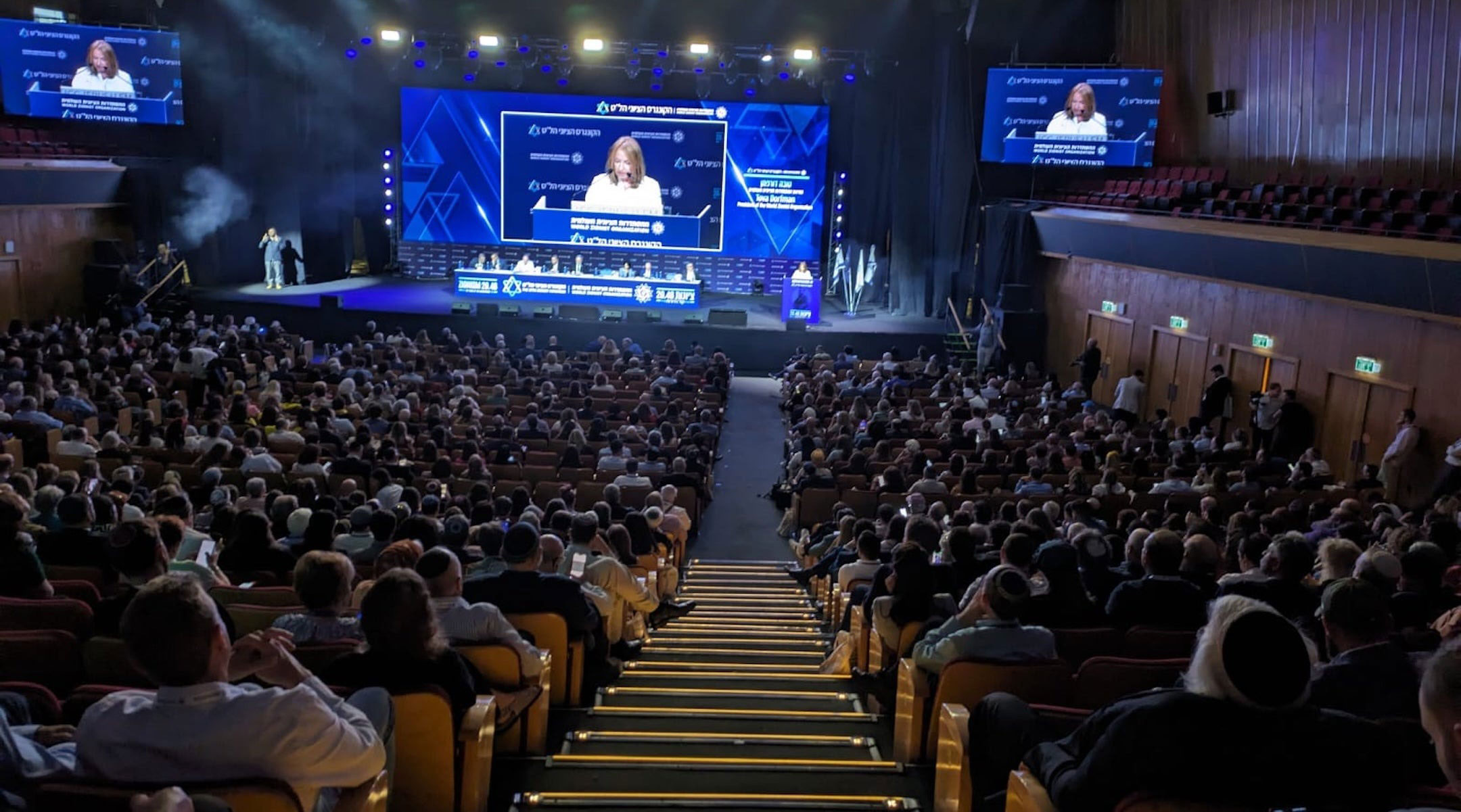
Delegates to the 39th World Zionist Congress convened in Jerusalem, Oct. 30, 2025
(JTA) — An early sign of moderation and compromise among the delegates here this week for the 39th World Zionist Congress appeared to shatter late Wednesday amid revelations that supporters of Prime Minister Benjamin Netanyahu sought to install his son Yair in a key leadership role.
The drama is roiling the high-stakes gathering that is often described as the “parliament of the Jewish people,” taking place against the backdrop of heightened antisemitism around the world and war in the region.
Delegates from more than 40 nations have converged in Jerusalem, with the U.S. delegation the largest in the congress’ history: 155 delegates and about 100 alternates, including 75 rabbis of various streams.
The congress, which opened Tuesday, is expected to determine the allocation of more than $1 billion annually toward Zionist institutions, appoint the leadership for the movement, and set the tone for Israel-Diaspora relations.
In his opening remarks, Israeli President Isaac Herzog underscored the enduring purpose of Zionism in an era of rising antisemitism.
“Those who once called us ‘Yids’ or ‘kikes’ now call us ‘Zios’… These ‘Zios’ are us,” he said. He invoked the founding vision of Theodor Herzl for a pluralistic Zionist movement that gathers multiple voices under one roof.
Yet beneath that message of unity, fissures have been visible, perhaps most notably in the absence of Netanyahu, marking the first time since Israel’s founding that a sitting premier has skipped the gathering.
Senior delegates said his absence reflected friction inside World Likud and his long-running dispute with its chair U.N. envoy Danny Danon, with whom he has sparred over internal appointments, as well as concern he would face a hostile reception from delegates.
Kenneth Bob, newly elected chairman of the World Labor Zionist Alliance, said that given that “half the congress are not fans,” Netanyahu’s decision to skip the convening was unsurprising.
“He’s afraid of the response he’d get from the delegates. He knows he’ll be greeted rudely,” he said.
But Netanyahu’s presence is still being felt. As delegates deliberate policy and funding, the congress is also navigating intense power-sharing negotiations. A deal reportedly struck between center-left and center-right Zionist blocs to rotate leadership of major institutions was thrown into jeopardy after word emerged that Yair Netanyahu — son of the prime minister — would take a senior role at the WZO. That revelation sparked the collapse of the agreement and forced the extension of the congress by two weeks.
Yair Netanyahu is a divisive figure in Israel. Unlike many other Israelis his age, 34, he spent the war living in Miami and did not serve in the reserves during the war in Gaza. He is known for his social media posts backing his father’s politics and advancing far-right conspiracy theories.
The deal that collapsed was notable for excluding only a single party from power-sharing: Otzma Yehudit, run by the far-right politician Itamar Ben-Gvir, currently Israel’s national security minister. The congress is the first to include delegations representing extremist parties.
The deal was also notable because it would have installed Doron Perez as the World Zionist Organization’s next chair. Perez’s son Daniel was murdered on Oct. 7 and his body was held hostage in Gaza until earlier this month.
Herbert Block, executive director of the American Zionist Movement, which represents U.S. Jewry at the congress, said the days of coalition bargaining had exposed familiar frictions among religious, right-wing, and liberal Zionist factions over control of budgets, appointments, and ideological priorities within the national institutions. Referring to the negotiations process, he quipped that it recalled the adage about how “laws are like sausages.”
“Enjoy the end product but not how they’re made. You don’t want to see them shechting the cow in the slaughterhouse,” he said, using the Hebrew term for ritual slaughter.